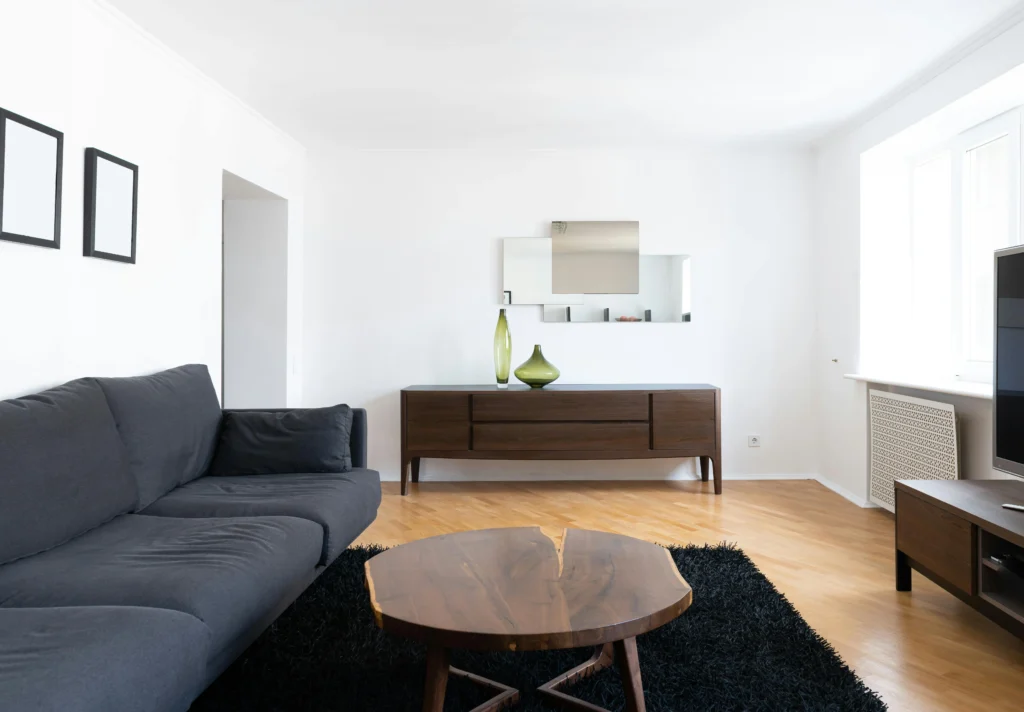

Small Living Room? 10 Space Saving Minimalist Hacks
If your small living room feels more “cozy corner” than “open retreat,” you’re not alone. Many of us live in apartments or homes where space is limited but that doesn’t mean style has to be. In fact, a small living room can feel just as airy, calm, and sophisticated as a large one when you use a minimalist approach.
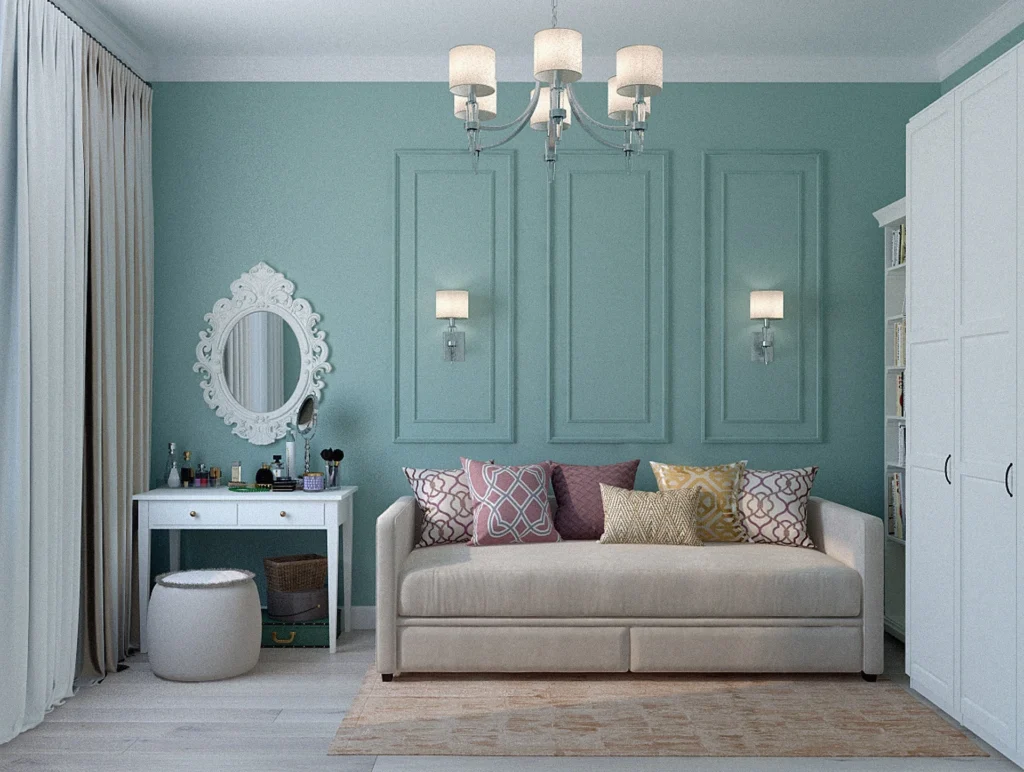
Minimalism isn’t about living with less for the sake of it it’s about making space for what truly matters. By combining clever design choices with thoughtful simplicity, you can create a living room that feels open, welcoming, and totally clutter-free.
Here are some space-saving minimalist hacks to transform your small living room into a functional and beautiful haven.
Declutter Before You Decorate
The first rule of minimalist living: less is more. Before buying furniture or rearranging your space, start by removing what you don’t need.
Look around your living room are there decorative items collecting dust? Old magazines on the coffee table? Too many throw pillows? It’s time to simplify.
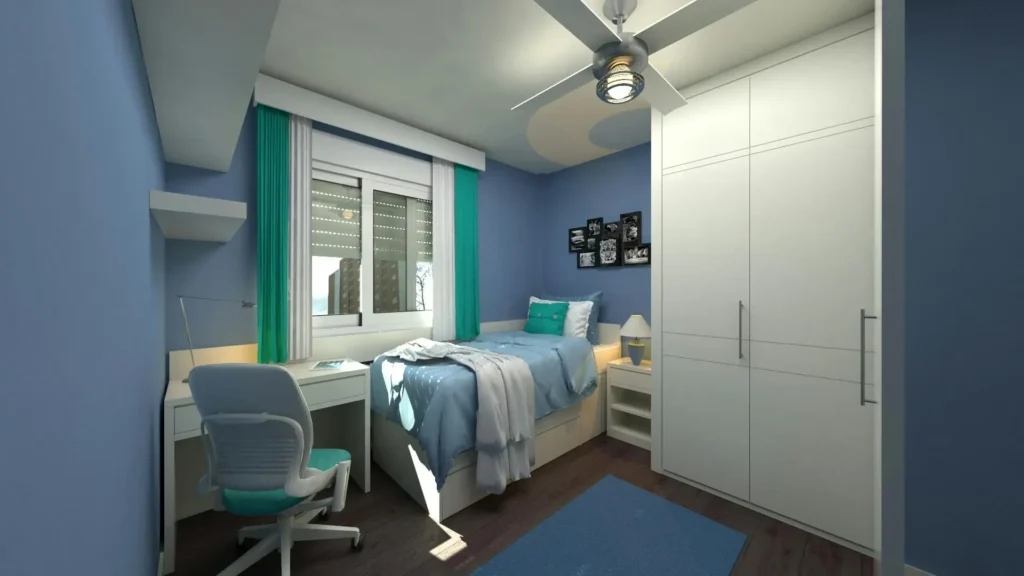
A clutter-free space immediately feels more spacious and peaceful. Once you’ve pared down, you’ll notice how every remaining piece stands out more intentionally.
Pro tip: Try the “one-touch rule” if you pick something up, make a decision about it right away. Either put it back, throw it out, or find a proper place for it.
Choose Furniture That Fits (Not Fills)
One of the biggest mistakes in small spaces is using furniture that’s simply too large. Instead of trying to fill every inch, choose furniture that fits the room’s proportions.
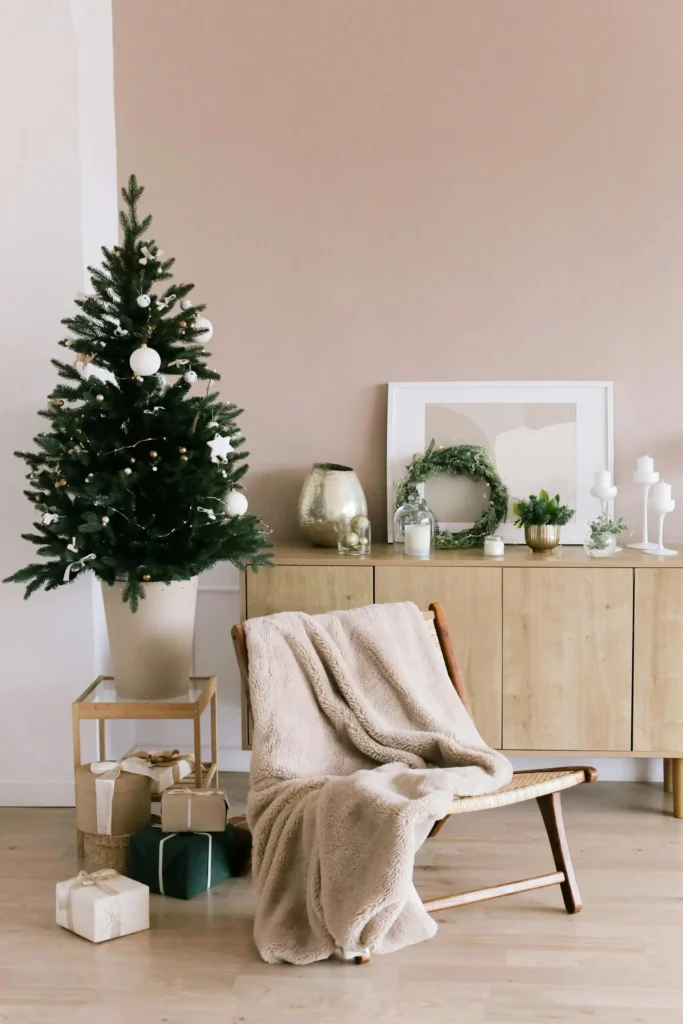
Go for sleek, low-profile sofas, armchairs with exposed legs, and narrow coffee tables. These allow more light to flow around them, creating a sense of openness.
Keep Your Color Palette Light and Simple
Color can completely change how big your space feels. Lighter tones like whites, creams, beiges, and soft grays reflect light and make walls recede visually.
That doesn’t mean everything has to be white. You can layer soft shades of taupe, sand, and warm gray for depth. Add a touch of black or charcoal in accents to ground the look.
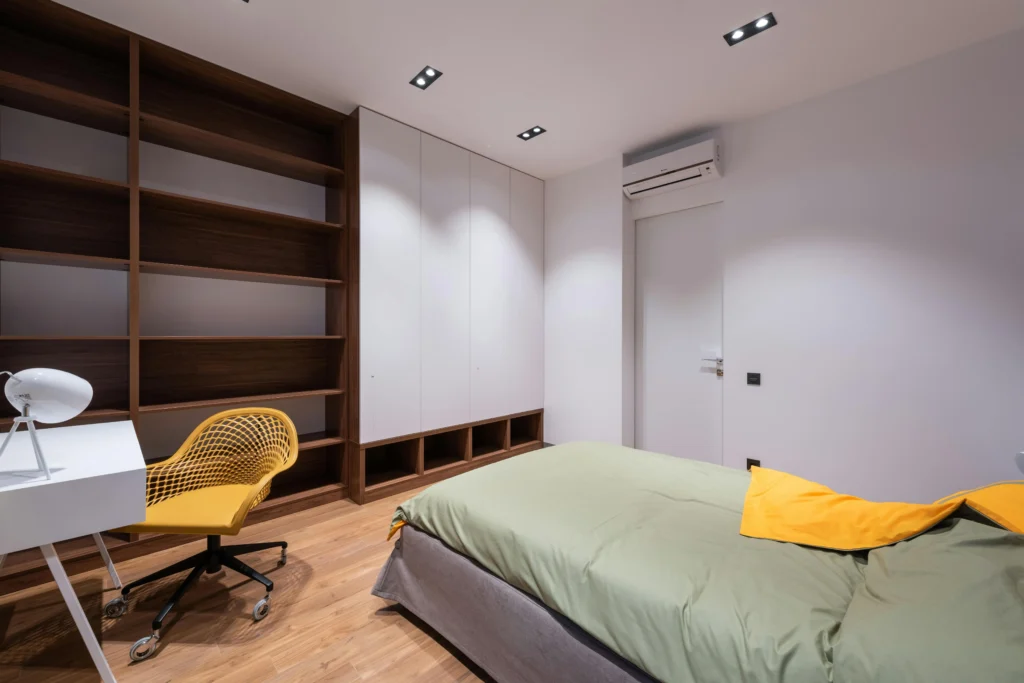
Pro tip: Keep your palette consistent throughout the room. When walls, furniture, and décor share similar tones, your space feels seamless and expansive.
Try Floating Furniture Arrangements
When you’re working with a small living room, don’t automatically push everything against the walls. Sometimes, floating your furniture pulling your sofa slightly away from the wall and placing a narrow console or plant behind it can make the room look more balanced.
It gives the illusion of depth and flow, especially in open-plan spaces. The key is to leave enough space for movement without overcrowding.
Add Vertical Storage Solutions
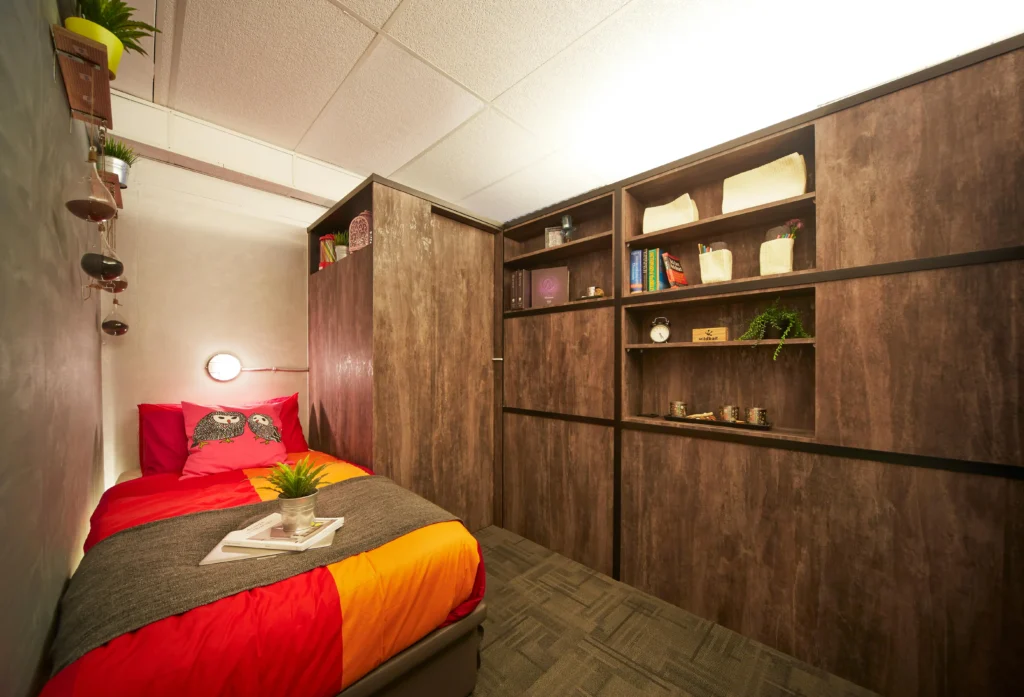
If you’re short on floor space, think upward. Vertical storage is one of the smartest minimalist hacks for small living rooms.
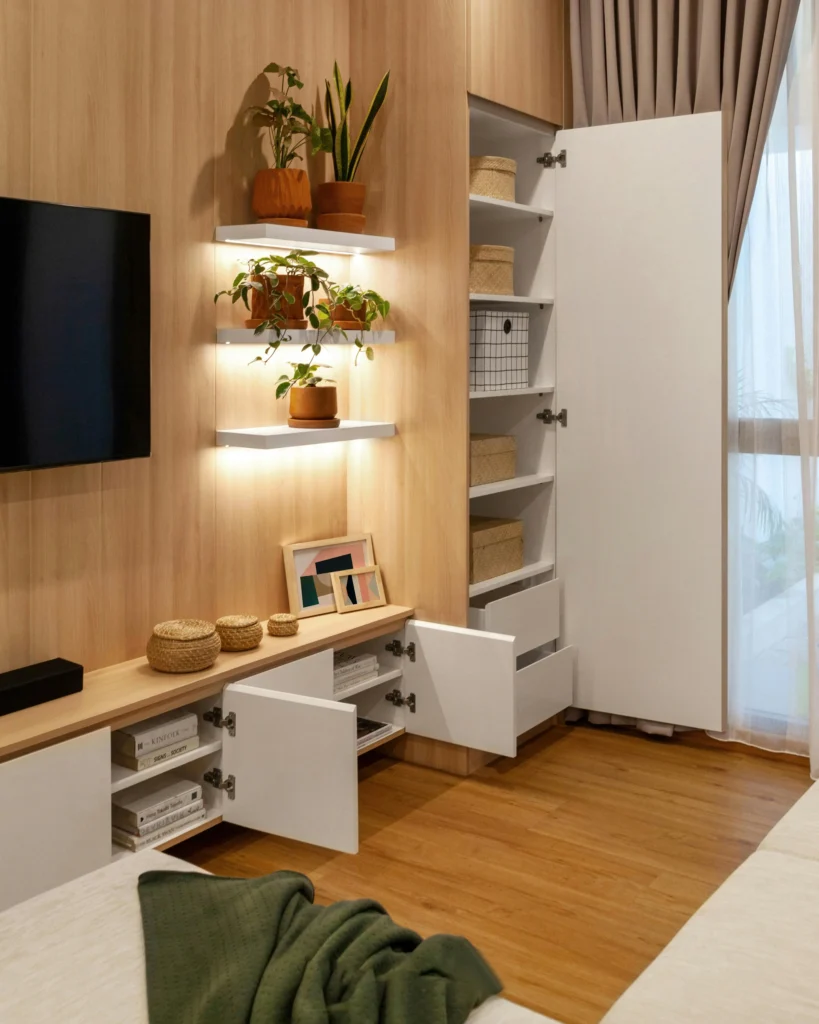
Install floating shelves, wall-mounted cabinets, or tall bookcases to make the most of your wall height. This keeps things off the floor and draws the eye upward, making the room feel taller.
Choose Multi Functional Furniture
Minimalists love furniture that serves more than one purpose and small-space dwellers do too.
Look for pieces like:
- A coffee table with hidden storage.
- A sofa bed for guests.
- Nesting tables that tuck away when not in use.
- Wall-mounted drop-leaf desks or dining tables.
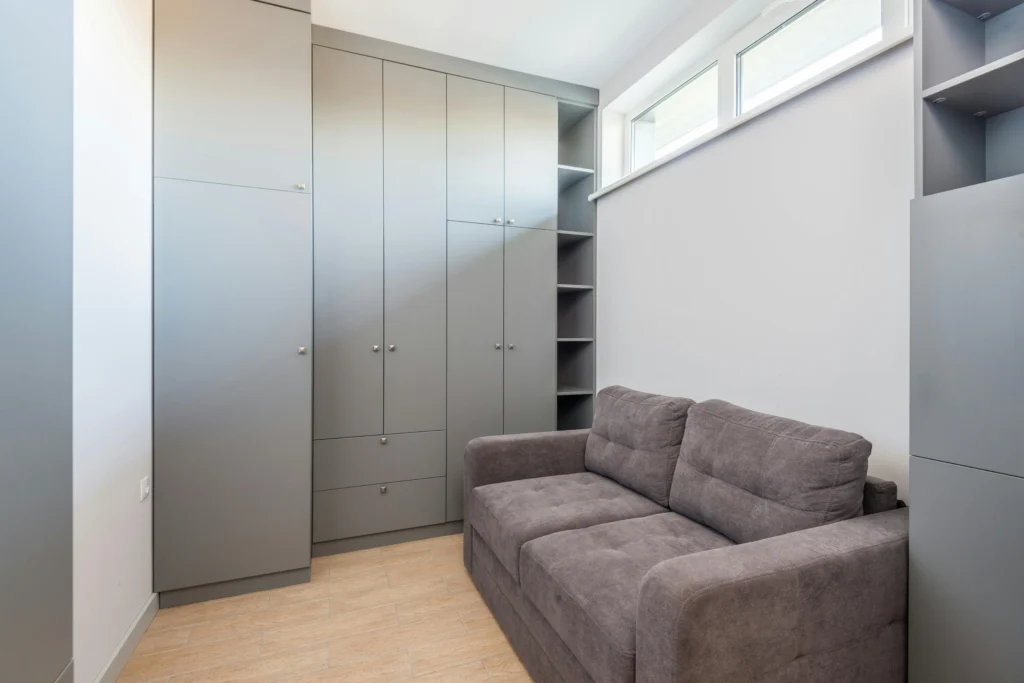
These items reduce the need for extra furniture, keeping your space uncluttered and practical.
Use Mirrors to Open Up the Space
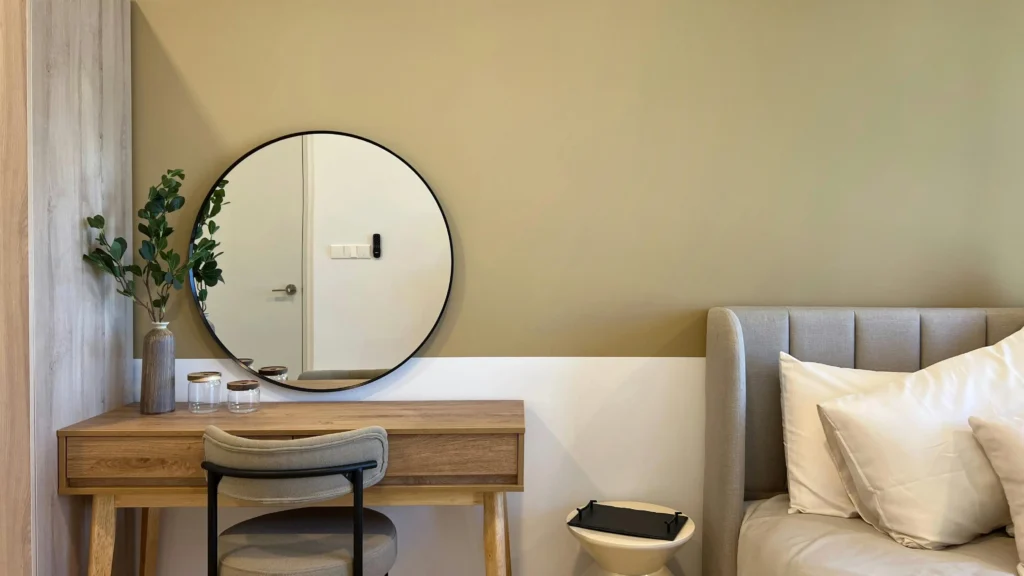
A classic minimalist trick: mirrors. They reflect light and create the illusion of more space instantly.
Hang a large mirror opposite a window to maximize natural light, or use smaller mirrors as subtle décor. Even mirrored furniture pieces (like a glass-top table or mirrored tray) can add brightness without bulk.
Limit Your Décor to a Few Intentional Pieces
Minimalist living doesn’t mean empty walls it means thoughtful decoration. Choose just a few meaningful items that reflect your personality and style.
Think one statement artwork, a sculptural vase, or a few neutral candles. Avoid overcrowding surfaces; give your favorite pieces space to breathe.
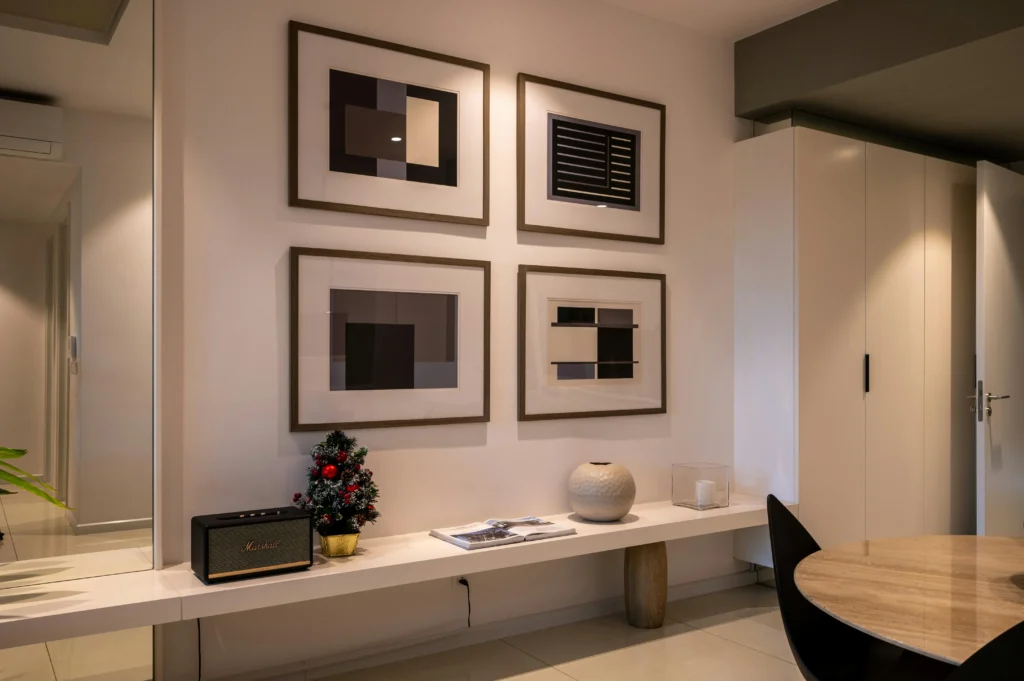
Pro tip: Follow the “rule of three.” Decorate surfaces in groups of three items with varied heights for visual balance.
Let in Natural Light
Light is one of your best allies in a small living room. Maximize natural light by using sheer curtains or blinds that let sunlight filter through. Avoid heavy drapes or dark window coverings that make the room feel smaller.
If your space doesn’t get much daylight, layer soft, warm lighting instead. Use floor lamps, wall sconces, or even string lights for a cozy glow without adding bulk.
Add Texture for Warmth
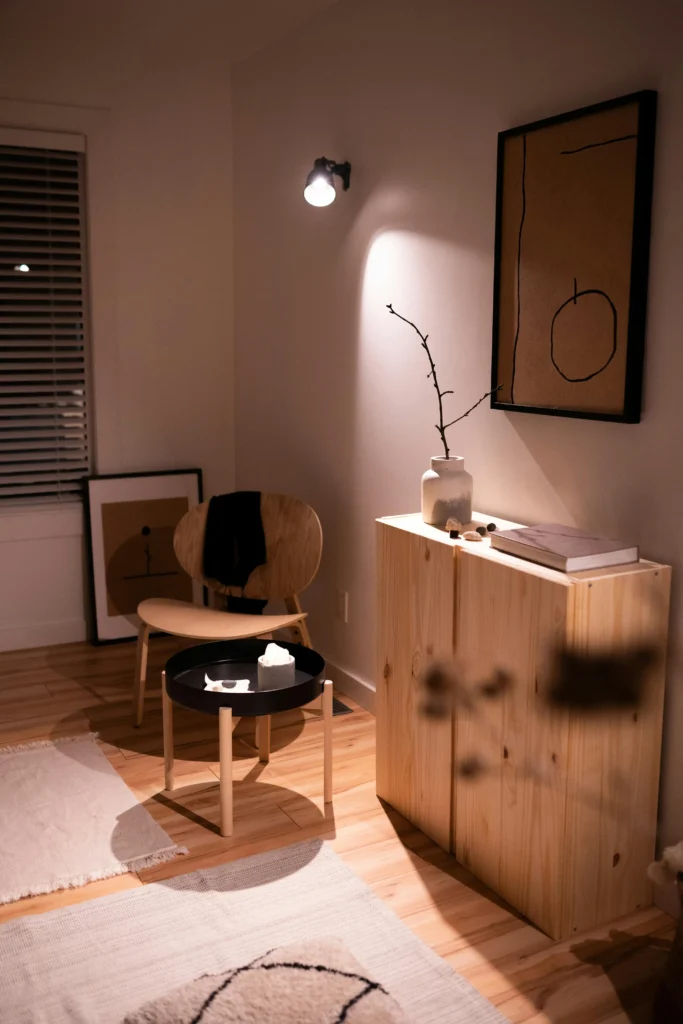
Minimalist spaces risk feeling cold if they lack texture. Introduce softness and warmth through natural materials a wool throw, linen cushions, a jute rug, or wooden accents.
These tactile elements make your space feel lived-in without disrupting the clean aesthetic. Stick to 2–3 textures for a balanced, cohesive look.
Hide the Clutter (Beautifully)
Even minimalists have stuff the trick is to store it stylishly.
Use baskets, trays, and closed cabinets to conceal everyday items like remotes, chargers, or magazines. Keep cords hidden using cable clips or a cord box.
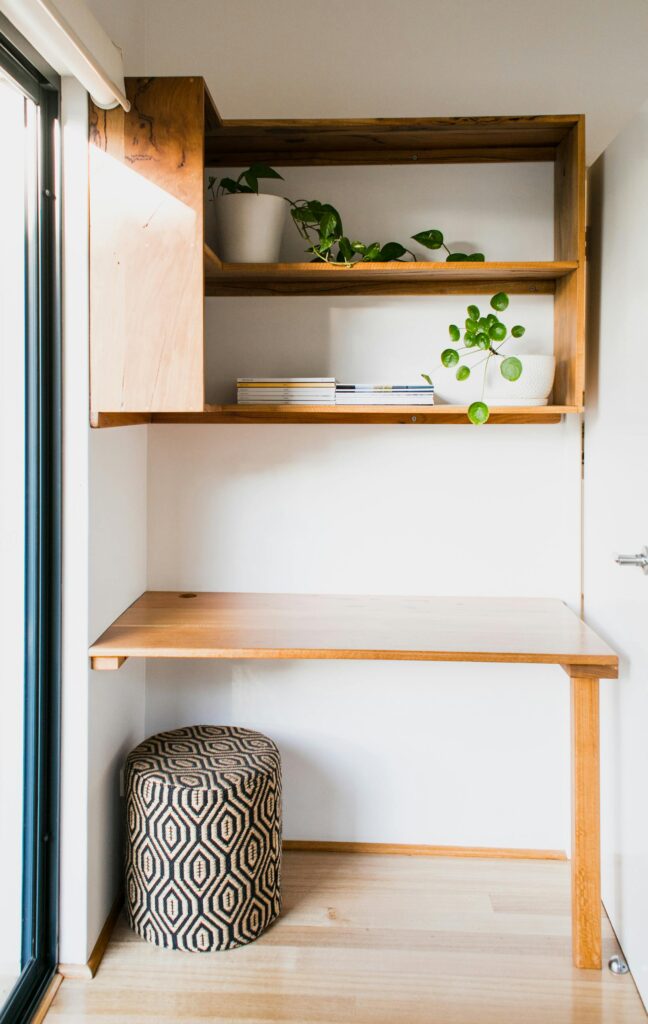
Pro tip: Open shelving looks cleaner when storage containers match in material or color it gives a unified, polished look.
Create Breathing Room
The true essence of minimalism lies in space not stuff. Don’t feel pressured to fill every corner. Negative space allows your eyes (and your mind) to rest.
Step back and evaluate your living room. If something feels unnecessary, remove it. The best spaces feel calm because they’re curated, not crowded.