

13 Corner Dining Room Decor Ideas That Save Space Fast
Corners are often the most overlooked spaces in a dining room, yet they hold the biggest design potential. With the right layout and smart furniture choices, even the smallest corner can become a cozy, stylish dining nook. Whether you’re decorating a small apartment or simply want to maximize space, corner dining setups create an intimate atmosphere while keeping the room open and functional.
From bold banquettes to soft neutral nooks, these ideas blend comfort with clever design. Each concept focuses on saving space without sacrificing style, helping you create a dining area that feels intentional, warm, and beautifully styled. If you’re ready to transform an unused corner into your favorite spot in the house, these ideas will inspire you instantly.
Red Patterned Banquette with Plates on the Wall and a Cozy Lamp
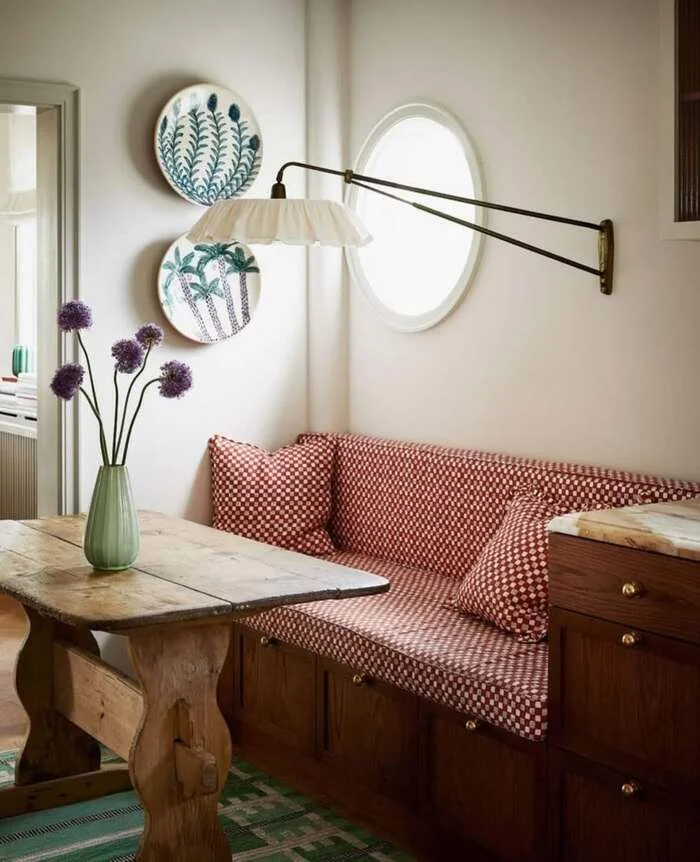
A red patterned banquette instantly energizes a forgotten dining corner and turns it into a statement feature that feels curated rather than improvised. The key to making this idea work in a small space is choosing a built-in or wall-hugging banquette that follows the exact angle of the corner, eliminating wasted gaps behind chairs. The bold red fabric, especially when paired with subtle patterns like florals or geometric prints, brings warmth and personality without overwhelming the room. To enhance the charm, hanging decorative plates on the wall above the seating adds vertical interest and pulls the eye upward, making the corner feel styled and intentional. A cozy table lamp placed on a small side ledge or console nearby softens the space with ambient lighting, which is essential for creating intimacy in compact areas. This combination of color, pattern, and layered lighting transforms the corner into a welcoming dining retreat that feels thoughtfully designed rather than squeezed in.
Functionality plays an equally important role in this design approach. A banquette naturally saves space because it removes the need for multiple dining chairs, allowing you to push the table closer to the wall. Opting for hidden storage beneath the seat cushions adds practical value, giving you a discreet place to store linens, seasonal decor, or rarely used kitchen items. The round or oval dining table works best here because it improves traffic flow and prevents sharp edges from interrupting movement in tight layouts. Meanwhile, the plate wall serves more than just decorative purposes; it adds texture and storytelling without taking up floor space. By keeping surrounding decor minimal and allowing the red banquette to anchor the corner, you create balance and avoid visual clutter, ensuring the area feels cozy yet breathable.
Styling details complete the transformation and elevate the space beyond basic functionality. Soft cushions layered in complementary tones such as cream, muted pink, or warm beige soften the bold red and enhance comfort for long dinners or casual coffee mornings. A natural wood or light-toned table keeps the look grounded and prevents the red from feeling overpowering. To tie everything together, a simple woven rug beneath the table can subtly define the dining zone without crowding it. This thoughtful layering of textures, light, and color ensures the corner feels cohesive and inviting. Instead of an empty, unused angle in the room, you now have a vibrant dining nook that feels intimate, stylish, and surprisingly spacious despite its compact footprint.
Olive Banquette with a Round Pedestal Table and Happy Color Pops
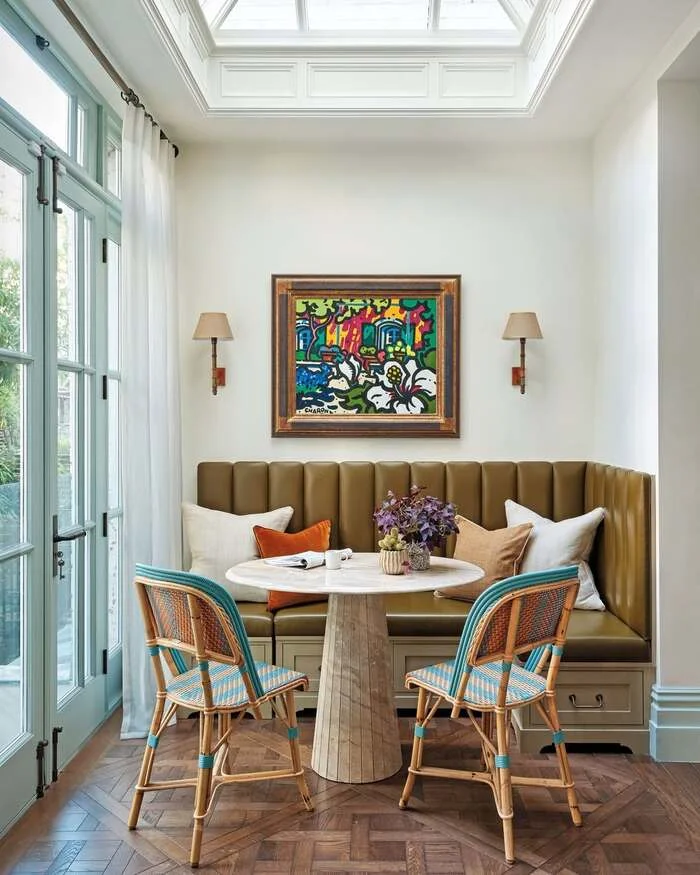
An olive green banquette introduces an earthy sophistication to a corner dining space while maintaining a calm and inviting atmosphere. This shade works beautifully because it feels grounded and natural, making it ideal for smaller rooms that need depth without heaviness. Positioning the banquette tightly against both walls maximizes every inch of the corner, instantly creating a built-in effect even if the seating is custom-made rather than structurally permanent. Pairing it with a round pedestal table enhances the flow of the room, as the single central base eliminates bulky legs and allows more flexible seating. The softness of olive green acts as a neutral backdrop, making it easy to incorporate cheerful color accents through cushions, artwork, or tabletop decor without overwhelming the space.
The pedestal table is particularly important in saving space efficiently. Unlike traditional four-legged tables, the pedestal design provides better legroom and allows chairs to slide in seamlessly, which is crucial in compact dining areas. Introducing small bursts of “happy color pops” through vibrant cushions, patterned seat pads, or bright ceramic dishware keeps the corner from feeling flat or overly serious. These playful accents add personality while maintaining a cohesive aesthetic. Wall art above the banquette can include abstract prints with hints of mustard, coral, or soft blue, tying the entire palette together. Lighting should remain warm and inviting, such as a pendant with a soft glow that highlights the olive tones and enhances the cozy ambiance.
To ensure balance, surrounding finishes should remain light and breathable. White or soft cream walls prevent the olive from darkening the corner, while natural wood elements introduce warmth and texture. Adding a small plant nearby enhances the organic feel and reinforces the connection to nature that olive green suggests. Storage beneath the banquette can discreetly hold dining essentials, ensuring the area stays tidy and functional. With its thoughtful blend of earthy tones, playful accents, and smart furniture choices, this corner design proves that saving space does not mean sacrificing style. Instead, it becomes a cheerful and efficient dining solution that feels intentional, welcoming, and perfectly tailored to smaller interiors.
Moody Banquette Corner with Layered Art and Warm Lighting
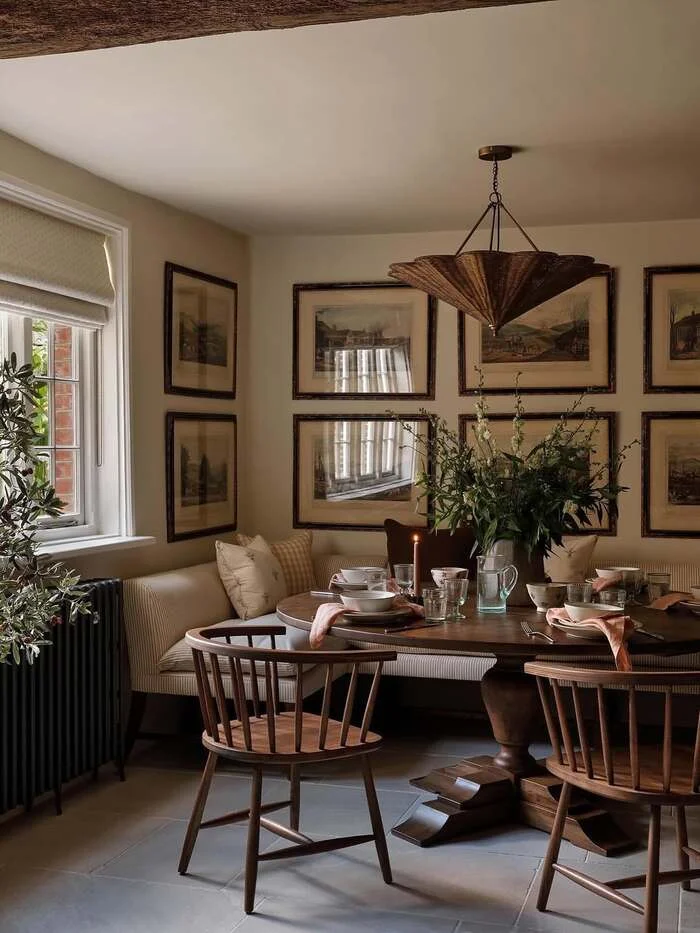
A moody banquette corner transforms an ordinary dining area into a dramatic and intimate retreat that feels rich in character. Deep hues such as charcoal, navy, or forest green create a cocoon-like atmosphere that naturally draws attention to the corner. When paired with layered artwork, this darker palette becomes sophisticated rather than heavy. Positioning multiple framed prints, abstract pieces, or even vintage-inspired art above the banquette adds depth and storytelling without consuming valuable floor space. The key to making a moody corner work in a small dining room is balance: darker walls or upholstery should be offset with warm lighting and subtle reflective elements to prevent the space from feeling cramped.
Warm lighting plays a critical role in softening the intensity of darker shades. A wall sconce or pendant with a golden glow enhances the mood while providing practical illumination for meals. Layering light sources, such as a small table lamp or under-seat LED strip, adds dimension and keeps the area inviting. Choosing a compact rectangular or round table ensures the layout remains efficient, allowing easy movement despite the dramatic styling. Upholstered seating enhances comfort and encourages longer gatherings, reinforcing the cozy nature of the design. The layered art above the banquette not only adds personality but also visually expands the wall, creating the illusion of height and depth within the corner.
Textural contrast further elevates this design concept and prevents it from feeling flat. Incorporating velvet cushions, matte black frames, brushed brass accents, or a subtle patterned rug introduces variation that enhances visual interest. Even in a small footprint, these details create a curated, designer-inspired atmosphere. Keeping adjacent areas lighter in tone helps define the corner as a distinct zone while maintaining overall balance within the room. The result is a dining nook that feels intimate, stylish, and surprisingly spacious despite its darker palette. By thoughtfully combining rich colors, layered art, and warm lighting, this moody banquette corner becomes a refined and space-saving solution that elevates the entire dining experience.
Minimal Corner Nook with One Branch, One Vase, and Zero Clutter
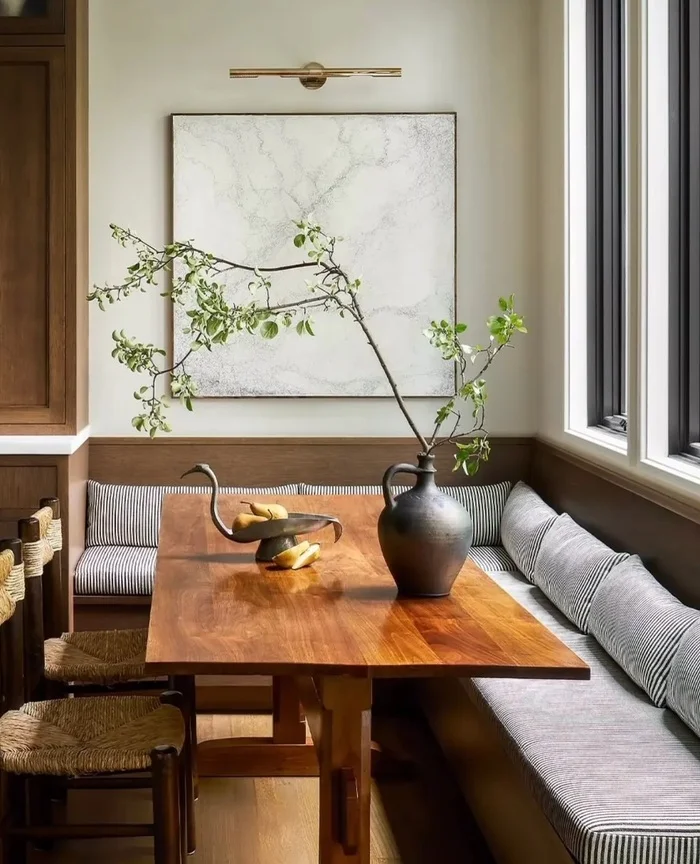
A minimal corner nook proves that saving space is often about subtracting rather than adding. Instead of filling the dining corner with bulky furniture or excessive décor, this approach focuses on restraint, balance, and intentional styling. A slim built-in bench or compact corner seat hugs the walls tightly, maximizing floor space and eliminating visual heaviness. The table should be simple, preferably round with clean lines and a light finish, so it blends seamlessly into the background rather than dominating the area. What truly defines this design is the commitment to “zero clutter.” One sculptural branch placed inside a single ceramic vase becomes the statement piece, drawing attention upward while maintaining airy simplicity. This deliberate limitation of decorative elements allows the corner to breathe and feel open, making even the smallest dining space appear larger and more refined.
Functionally, minimalism works exceptionally well in tight dining corners because it enhances movement and clarity. Without extra shelves, oversized art, or layered textiles, the space remains streamlined and easy to navigate. The bench can include subtle hidden storage beneath the seat to maintain practicality without disturbing the clean aesthetic. Neutral tones such as soft white, beige, pale gray, or light wood finishes amplify natural light and reduce visual noise. Instead of heavy curtains or bold wall treatments, keeping the surrounding walls plain reinforces the calming atmosphere. Lighting should be understated yet warm, perhaps a small pendant or a discreet wall sconce that complements the simplicity of the design. Every element in the nook serves a purpose, ensuring the space feels intentional rather than empty.
The power of this minimal approach lies in its quiet elegance. The single branch in the vase introduces organic movement and softness, preventing the corner from feeling sterile while still honoring the principle of restraint. Smooth surfaces, subtle textures, and uncluttered tabletops encourage relaxation and focus during meals. By avoiding unnecessary accessories, you allow the architecture of the corner and the shape of the furniture to become the focal point. This design demonstrates that space-saving solutions do not always require bold colors or dramatic features; sometimes, the most effective transformation comes from embracing simplicity. The result is a serene dining nook that feels open, balanced, and effortlessly sophisticated.
Bold Modern Banquette with Blue Seating and a Light Table
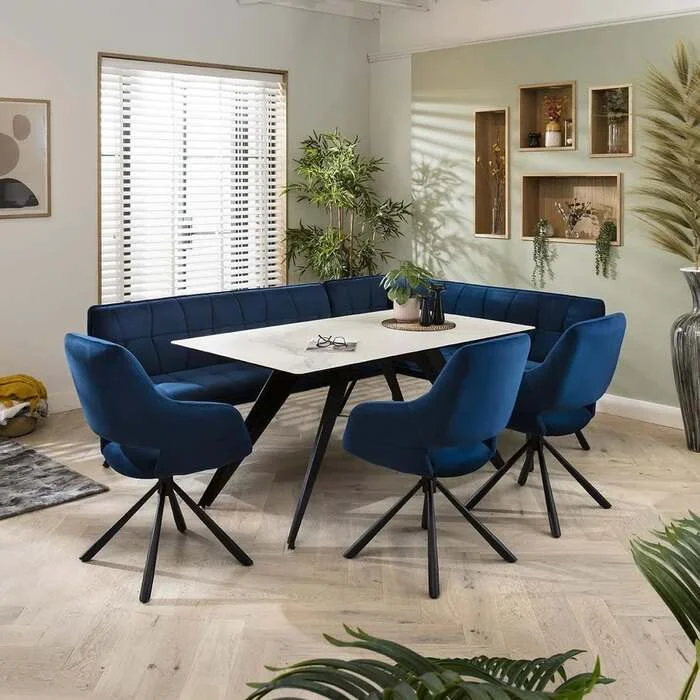
A bold modern banquette in rich blue instantly energizes a dining corner and transforms it into a dynamic focal point. Blue, especially in deeper or saturated tones, introduces personality while still maintaining versatility. Installing a corner banquette that fits snugly along both walls eliminates the need for multiple chairs, saving precious floor space and creating a streamlined silhouette. To balance the intensity of the blue seating, pairing it with a light-colored table in oak, ash, or white lacquer prevents the space from feeling heavy. This contrast between bold upholstery and a light tabletop creates visual harmony while keeping the overall atmosphere fresh and modern. The structured lines of the banquette reinforce a contemporary aesthetic, making the corner feel architecturally intentional rather than improvised.
From a functional perspective, this setup maximizes efficiency without sacrificing comfort. The built-in seating allows more people to gather in a compact footprint compared to traditional dining chairs. A rectangular or softly rounded table positioned tightly against the banquette ensures easy access while maintaining smooth circulation around the room. To enhance the modern vibe, consider sleek lighting such as a minimalist pendant or slim wall sconces that emphasize clean geometry. Decorative accents should remain curated and purposeful, perhaps a single abstract artwork or subtle metallic detail that complements the blue tones. The light table surface reflects illumination, helping the corner feel open despite the saturated seating color.
Styling plays an essential role in maintaining balance within this bold concept. Cushions in complementary shades like soft gray, muted beige, or even patterned neutrals soften the blue and add depth without overwhelming the eye. The surrounding walls can remain light to enhance contrast and allow the banquette to stand out confidently. Incorporating subtle textures, such as woven placemats or a low-profile rug, introduces warmth while preserving the modern aesthetic. Hidden storage beneath the seating further enhances practicality, ensuring the space remains tidy and functional. This bold blue banquette corner demonstrates that strong color choices can coexist with space-saving design, resulting in a dining area that feels vibrant, contemporary, and thoughtfully optimized.
Small Breakfast Corner with Patterned Tile and a Round Table
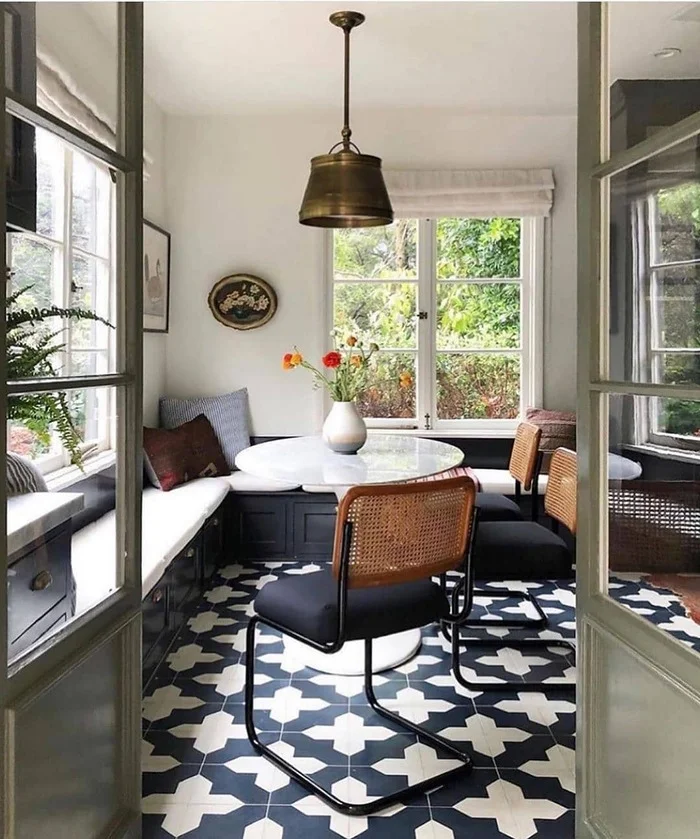
A small breakfast corner becomes visually captivating when patterned tile is introduced as a defining feature. Whether applied as a backsplash along the wall or as a floor accent beneath the table, patterned tile injects personality without requiring additional furniture. This design strategy is particularly effective in compact dining spaces because it relies on surface treatment rather than bulk. A round table positioned centrally within the corner enhances flow and eliminates sharp edges that could disrupt movement. Compact seating, such as a slim bench paired with one or two lightweight chairs, ensures the layout remains flexible and uncluttered. The tile pattern, whether geometric, floral, or Mediterranean-inspired, anchors the space and creates a decorative focal point that feels intentional and lively.
Functionality remains at the heart of this concept. The round table allows easy circulation and adapts comfortably to small footprints, making it ideal for daily breakfasts or casual coffee moments. Patterned tile also offers durability and easy maintenance, which is especially valuable in dining areas prone to spills. To prevent the design from feeling busy, surrounding elements should remain simple and cohesive. Neutral seating upholstery, light wall colors, and understated lighting allow the tile to shine without overwhelming the senses. A compact pendant light centered above the table adds warmth and draws attention downward, emphasizing the cozy scale of the nook. This layered yet restrained approach ensures the corner feels dynamic but not crowded.
Finishing details enhance the charm and usability of the breakfast corner. A small centerpiece, such as a bowl of fruit or a modest vase of fresh flowers, keeps the table inviting without cluttering it. Soft cushions on the bench introduce comfort while echoing subtle colors found in the tile pattern. If storage is needed, a slim shelf or built-in compartment beneath the bench can discreetly hold essentials. By combining patterned tile with space-efficient furniture choices, this breakfast corner becomes both practical and visually engaging. It transforms a modest corner into a cheerful, design-forward dining spot that feels custom-tailored to maximize every inch of available space.
Soft Neutral Corner with a Round Table and a Big Glassy Chandelier
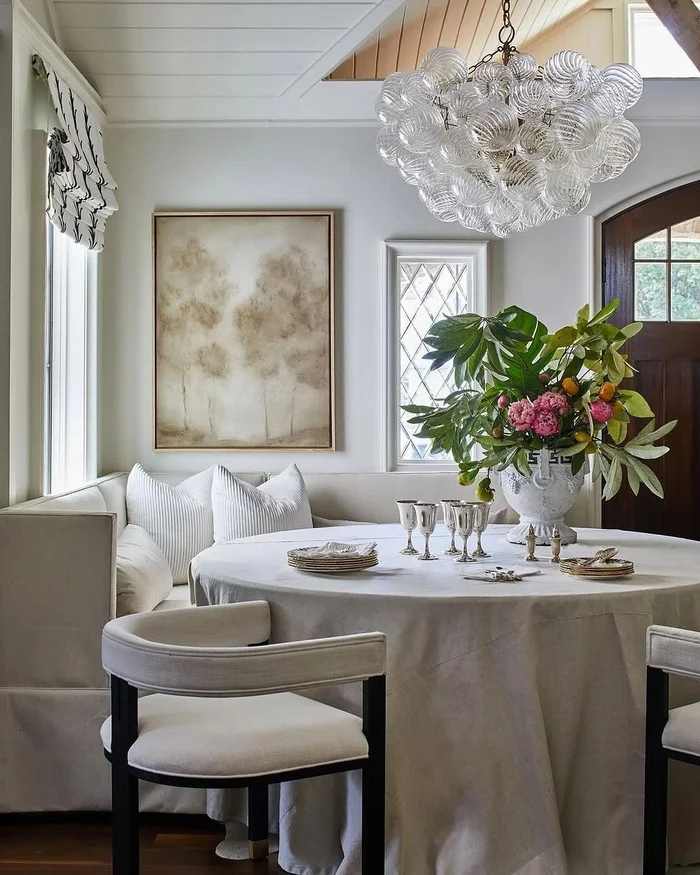
A soft neutral corner creates an atmosphere of calm elegance while maximizing limited dining space with subtle sophistication. This design relies on a palette of creamy whites, warm beiges, light taupe, and soft greige tones that reflect natural light and visually expand the room. Positioning a compact round table in the center of the corner ensures easy movement and prevents harsh angles from interrupting flow. Upholstered seating or a slim built-in bench along the walls enhances comfort without adding bulk. The defining feature of this setup is a large glassy chandelier suspended above the table. Its transparent or lightly tinted glass structure introduces visual drama without heaviness, allowing the corner to feel open and airy while still making a statement.
Functionality blends seamlessly with style in this arrangement. The round table keeps circulation smooth, which is essential in tight dining areas, while the neutral color scheme prevents the corner from feeling boxed in. A bench with concealed storage beneath the cushions can discreetly hold linens, extra dishware, or seasonal décor, ensuring the space remains tidy. The glass chandelier works strategically by reflecting light around the room, amplifying brightness and adding depth. Walls can remain lightly textured or painted in soft neutral tones to maintain continuity. By avoiding overly bold accents, the design emphasizes harmony and balance, creating a dining corner that feels cohesive and thoughtfully curated.
To complete the look, layering subtle textures enhances warmth without disrupting the soft palette. Linen cushions, a woven rug, or lightly brushed wood finishes introduce tactile interest while preserving the serene atmosphere. Minimal tabletop décor, such as a simple ceramic bowl or a small arrangement of dried stems, maintains elegance without clutter. The chandelier’s glow becomes the focal point during evening meals, casting gentle reflections that elevate the overall ambiance. This soft neutral corner proves that understated design can still feel luxurious, and that thoughtful lighting paired with space-efficient furniture can transform a modest corner into a refined and welcoming dining retreat.
Bright White Corner with Gold Mirrors and a Glam Fireplace Vibe
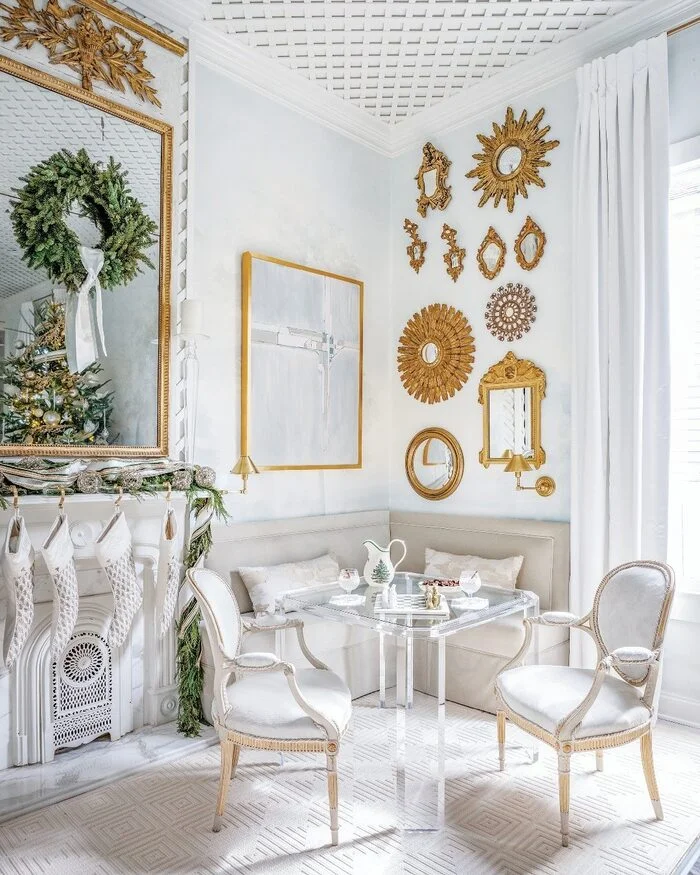
A bright white dining corner instantly feels spacious, fresh, and uplifting, making it an ideal solution for compact interiors. Crisp white walls and seating reflect natural light, visually expanding the area and eliminating shadows that can make corners feel tight. To introduce character and depth, incorporating gold mirrors along the wall adds reflective brilliance and subtle glamour. These mirrors not only amplify brightness but also create the illusion of extended space, making the dining nook appear larger than it truly is. A small round or oval table positioned tightly into the corner maintains efficiency while preserving elegance. The addition of fireplace-inspired décor elements, even if purely decorative, enhances warmth and gives the corner a sophisticated, upscale ambiance.
The strategic use of gold accents elevates the white backdrop without overwhelming it. Framed mirrors in warm metallic tones bounce light across the room and add visual layering without consuming floor area. Compact seating, whether a slim bench or minimal upholstered chairs, keeps the layout functional and uncluttered. If a decorative mantel or faux fireplace element is present, it anchors the corner and introduces architectural charm without adding bulk. Lighting should be warm and slightly golden to complement the metallic finishes, reinforcing the glam aesthetic while maintaining intimacy. This combination of brightness and warmth ensures the corner feels inviting rather than sterile.
Finishing touches enhance cohesion and polish the overall design. Soft white or cream cushions layered with subtle gold or beige accents maintain continuity within the palette. A delicate centerpiece, such as a glass vase or metallic bowl, reinforces the glamorous theme without crowding the table. Textures like velvet, marble, or brushed metal can be introduced sparingly to enrich the visual experience. By keeping the primary color scheme light and reflective, the space-saving benefits of the corner layout become even more pronounced. This bright white corner with gold mirror accents proves that even a small dining area can feel luxurious, radiant, and thoughtfully designed when light and reflection are used strategically.
Modern Green Banquette with a Round Wood Table and Floating Shelves
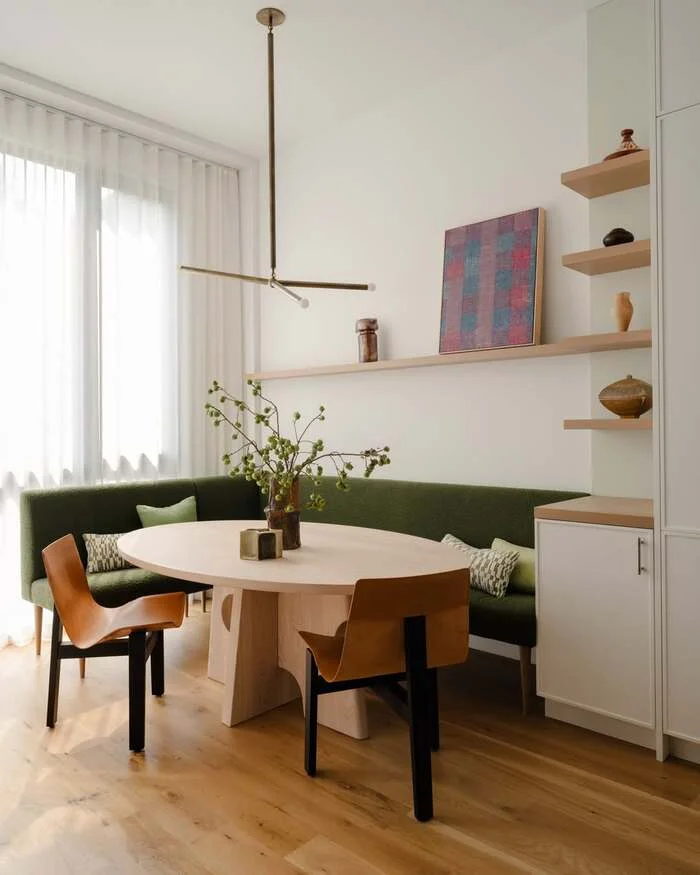
A modern green banquette offers a perfect blend of freshness and structure, transforming a simple corner into a stylish and efficient dining hub. Green tones, particularly mid-to-deep shades like moss or eucalyptus, create a grounded yet contemporary atmosphere. Installing a corner banquette flush against both walls optimizes the footprint and removes the need for multiple chairs, instantly freeing up valuable floor space. A round wood table positioned in front of the seating introduces warmth and natural texture, balancing the richness of the green upholstery. Above the banquette, floating shelves replace bulky cabinets or large artwork, providing storage and display opportunities without crowding the room.
The round wood table plays a crucial role in maintaining fluid movement throughout the dining area. Its curved edges soften the geometry of the corner and allow for better circulation in tighter layouts. Floating shelves contribute vertical functionality by offering space for decorative objects, small plants, or neatly stacked dishware. This vertical storage solution draws the eye upward, making the ceiling appear higher and the corner more expansive. To maintain a cohesive aesthetic, shelf décor should remain minimal and thoughtfully arranged, preventing visual clutter. Lighting can be introduced through a simple pendant or integrated shelf lighting to highlight displayed items while maintaining warmth and comfort.
Styling elements complete the modern yet inviting feel of this design. Neutral cushions layered against the green banquette soften the color and introduce comfort. The natural wood grain of the table adds organic contrast, ensuring the space feels balanced rather than overly saturated. A subtle area rug beneath the table can define the dining zone without shrinking it visually. By combining practical built-in seating, a compact round table, and vertical shelving, this modern green corner achieves both efficiency and aesthetic appeal. It demonstrates how thoughtful layering of color, texture, and storage can transform an overlooked corner into a functional and beautifully composed dining space.
Casual Corner with a Bench, a Plate Wall, and a Soft Statement Pendant
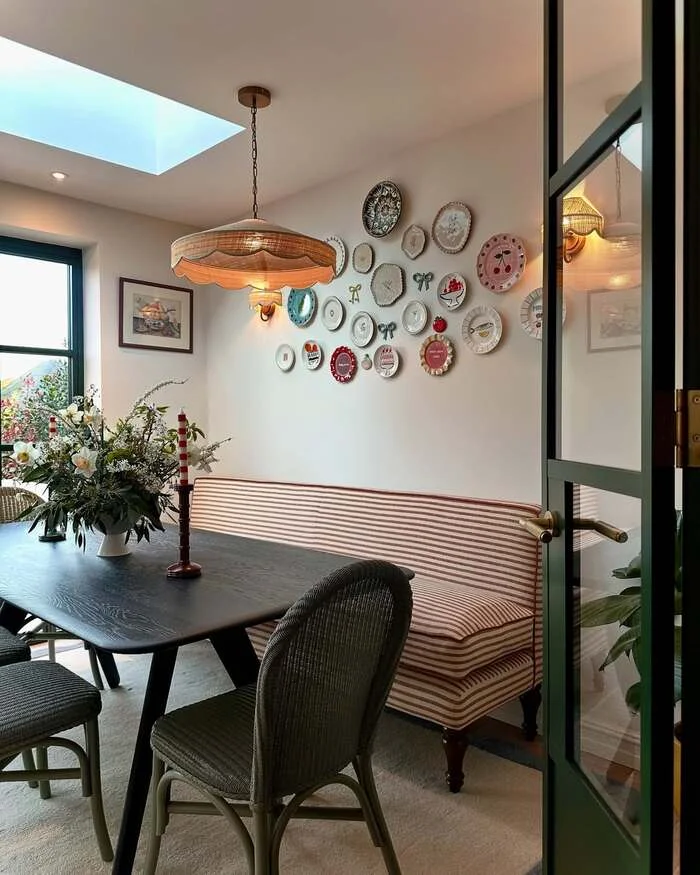
A casual dining corner built around a simple bench creates an inviting and effortless atmosphere while maximizing limited square footage. Instead of bulky dining chairs that require space on all sides, a streamlined bench placed flush against the wall instantly opens up the area and improves flow. This layout is especially effective in small dining rooms or open-plan spaces where maintaining visual openness is essential. A compact round or slightly oval table positioned in front of the bench ensures easy circulation and flexibility. Above the seating, a decorative plate wall adds personality and charm without taking up any floor space. The layered arrangement of plates creates visual texture and a collected feel, transforming a basic corner into a curated dining nook that feels warm and welcoming.
The addition of a soft statement pendant enhances both style and function within this casual setup. A gently oversized fabric or woven pendant introduces softness and diffuses light evenly across the table, creating a cozy ambiance for everyday meals. Unlike rigid or overly modern lighting fixtures, a softer pendant complements the relaxed character of the bench seating. To maintain balance, the surrounding décor should remain light and breathable, allowing the plate wall and pendant to serve as focal points. Hidden storage beneath the bench can discreetly accommodate extra cushions, linens, or seasonal accessories, ensuring the corner remains uncluttered and practical for daily use.
Textural layering completes the relaxed yet intentional aesthetic. Cushions in neutral or subtly patterned fabrics add comfort while enhancing the informal vibe. A natural wood table keeps the design grounded and prevents the space from feeling overly decorative. If desired, a low-profile rug beneath the table can define the dining zone without overwhelming it. The plate wall above introduces dimension and storytelling, while the soft pendant casts a warm glow that makes the corner feel intimate and lived-in. This casual bench setup proves that space-saving design does not require rigid minimalism; instead, it can feel approachable, charming, and thoughtfully styled for everyday comfort.
Creamy Built-In Banquette That Feels Like a Boutique Café (But at Home)
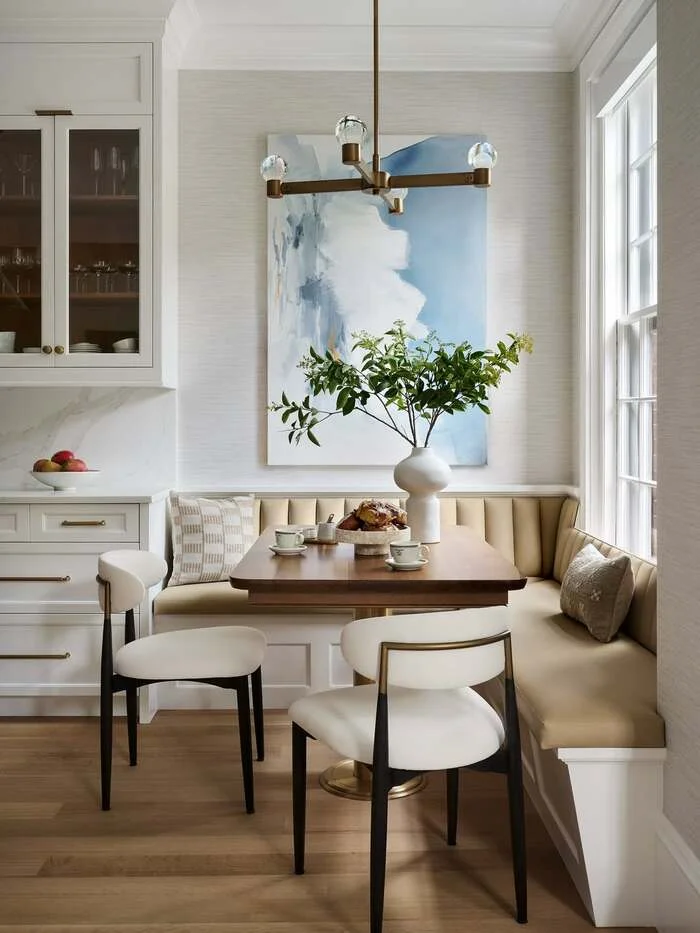
A creamy built-in banquette instantly transforms a corner into a refined dining experience reminiscent of a boutique café. The soft cream tone introduces warmth without heaviness, making it ideal for smaller rooms that need brightness with depth. By customizing the banquette to fit perfectly along the walls, you eliminate awkward gaps and maximize every inch of the corner. This built-in approach creates a seamless architectural look that feels intentional and polished. Paired with a compact round or oval table, the setup encourages intimate gatherings while preserving smooth circulation around the room. The creamy upholstery reflects light gently, enhancing the overall openness of the space while maintaining a cozy atmosphere.
Functionality is seamlessly integrated into this café-inspired design. Built-in seating allows for concealed storage beneath the cushions, offering a discreet solution for storing dining essentials, table linens, or seasonal décor. The table choice should complement the softness of the cream seating, perhaps featuring light wood, marble, or a subtle matte finish. Lighting plays a crucial role in achieving the boutique ambiance; a pair of small wall sconces or a softly glowing pendant can recreate the intimate charm of a café setting. Surrounding walls can feature minimal art or subtle paneling to add depth without cluttering the design. The overall composition should feel cohesive and serene rather than busy.
Finishing details elevate the corner from functional to aspirational. Layered cushions in complementary neutral tones enhance comfort and visual interest. A simple centerpiece, such as a ceramic vase or a small arrangement of fresh flowers, keeps the table styled without excess. Soft textiles like linen or cotton contribute to the relaxed café atmosphere. By combining built-in efficiency with warm neutral tones and thoughtful lighting, this creamy banquette corner becomes a stylish retreat within the home. It demonstrates how a compact space can feel luxurious and inviting when carefully curated, offering both practicality and a touch of everyday indulgence.
Rustic Bench Corner with Copper Wall Décor and a Tiny Bistro Table
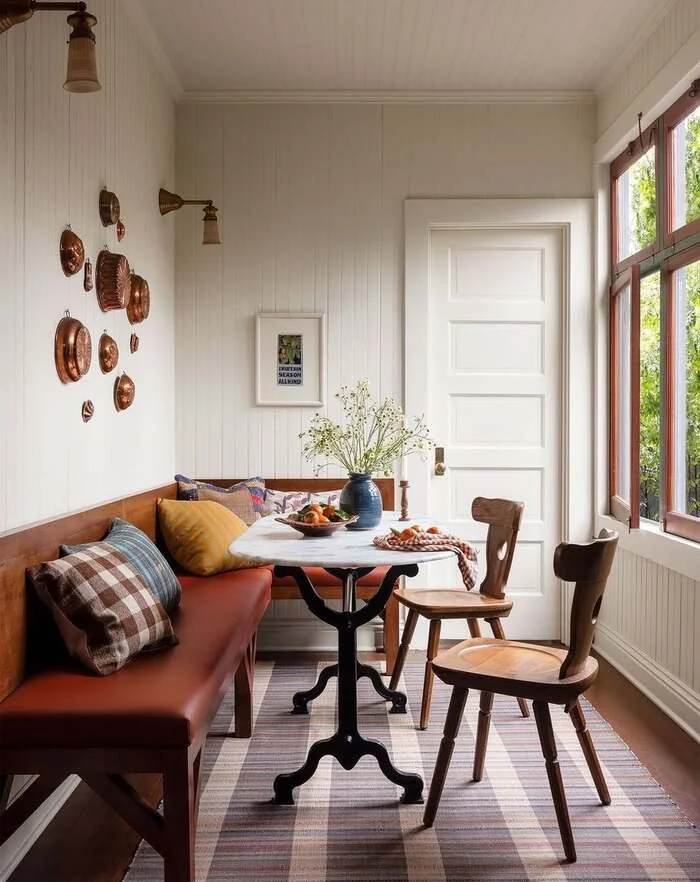
A rustic bench corner introduces warmth and character to a small dining space while maintaining efficient use of square footage. A sturdy wooden bench placed snugly against the walls anchors the corner and eliminates the need for multiple chairs, instantly saving space. The natural grain and slightly weathered finish of the wood create authenticity and depth, making the nook feel welcoming and grounded. A tiny bistro table positioned in front of the bench keeps the layout compact while enhancing the intimate feel. Its smaller scale allows easy movement around the corner, ensuring the space remains functional despite its cozy proportions. Copper wall décor above the bench adds a distinctive focal point that reflects light and introduces subtle metallic warmth.
Copper accents work particularly well in rustic settings because they complement wood tones and add gentle contrast without overwhelming the design. Decorative copper plates, trays, or sculptural pieces mounted on the wall provide visual interest while preserving valuable floor space. Lighting should enhance the warmth of the materials, perhaps through a small pendant with a soft glow that highlights the copper’s reflective qualities. Keeping the surrounding palette neutral ensures the rustic textures remain the star of the design. If additional functionality is needed, the bench can include hidden storage compartments beneath the seat to maintain organization without disrupting the aesthetic.
Layering textures completes the rustic yet space-efficient corner. Linen or woven cushions soften the wooden bench and improve comfort for extended meals. A subtle patterned rug can define the area while reinforcing the cozy ambiance. The small bistro table encourages intimate dining moments and prevents the corner from feeling crowded. By thoughtfully combining natural wood, warm copper accents, and compact furniture, this rustic bench corner achieves both charm and practicality. It proves that even the smallest dining corner can feel rich in texture and personality while remaining highly functional and beautifully organized.
Modern Corner with a Deep Green Wall and Quiet Gallery Energy
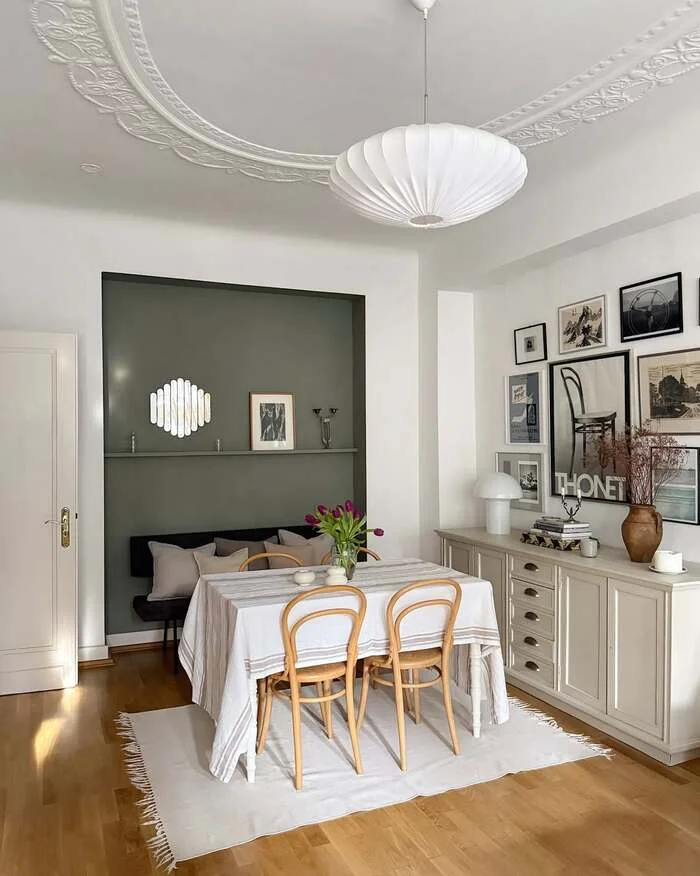
A modern corner anchored by a deep green wall instantly establishes mood, depth, and quiet sophistication within a compact dining area. Unlike lighter palettes that aim to expand visually, this approach embraces richness to create intimacy and character. Painting the corner walls in a saturated green tone defines the dining zone clearly, even in open-plan layouts. A streamlined bench or compact upholstered seating placed tightly against the walls maximizes floor efficiency while reinforcing clean, architectural lines. Paired with a small round or softly curved table, the layout maintains smooth circulation without sacrificing style. The deep green backdrop acts as a gallery-like canvas, allowing art and subtle décor elements to stand out without overwhelming the space.
The concept of “quiet gallery energy” focuses on restraint and intentional styling. Instead of cluttering the walls with excessive décor, a few carefully selected framed artworks arranged with breathing room create a curated aesthetic. Thin black, brass, or wood frames enhance the contemporary feel while complementing the richness of the green wall. Lighting should be warm yet focused, perhaps through a directional pendant or subtle wall sconces that gently illuminate the artwork and dining surface. This layered lighting prevents the darker wall from feeling heavy and adds dimension to the corner. The seating can incorporate neutral cushions to soften the intensity of the green while maintaining balance within the design.
Finishing touches elevate the space into a refined yet functional dining retreat. A natural wood or matte-finish table contrasts beautifully with the saturated wall color, adding warmth and texture. Minimal tabletop styling keeps the gallery-inspired atmosphere intact, ensuring the focus remains on the overall composition rather than decorative excess. If additional storage is required, hidden compartments beneath the bench maintain organization without disturbing the visual calm. The result is a dining corner that feels intimate, artistic, and highly intentional. By combining deep color, curated art, and space-efficient furniture, this modern corner proves that small dining areas can feel elevated, sophisticated, and quietly dramatic.
Conclusion
Transforming a corner into a dining space is one of the smartest ways to maximize square footage without expanding your room. Whether you prefer bold colors, soft neutrals, rustic textures, or modern gallery inspired walls, each idea proves that thoughtful layout and intentional styling can turn overlooked corners into functional showpieces. Built-in banquettes, compact round tables, layered lighting, and vertical décor solutions work together to save space while enhancing comfort and personality.
The key is balance combining efficiency with warmth, simplicity with character, and practicality with beauty. When designed carefully, a corner dining nook doesn’t feel like a compromise; it feels intimate, curated, and purposeful. With the right seating, lighting, and décor choices, even the smallest corner can become your favorite gathering spot in the home.


