

Soft Bedroom Aesthetic for Peaceful Nights | Pure Zen Decor
A soft bedroom aesthetic is more than just a visual trend it’s a lifestyle choice that supports better rest, mental calm, and emotional comfort. When your bedroom feels gentle, warm, and uncluttered, your mind naturally slows down at the end of the day. Soft colors, cozy textures, and intentional styling can turn even the simplest bedroom into a peaceful retreat. This guide walks you through practical, realistic ways to create a soft bedroom aesthetic that truly supports restful nights and relaxed mornings.
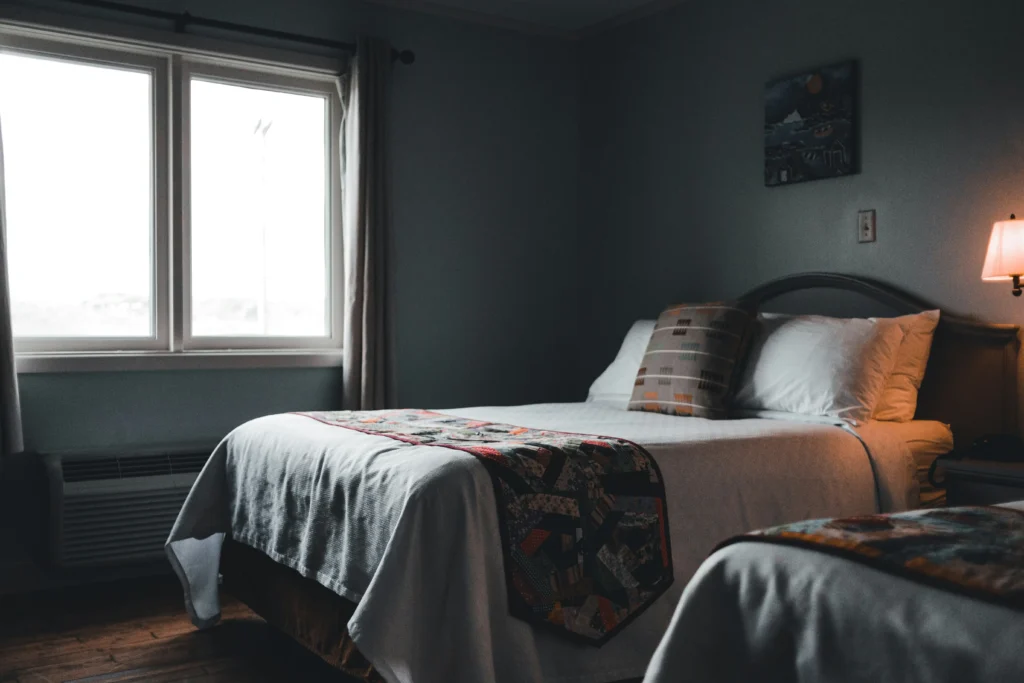
Start With a Calm Muted Color Palette
Color is the foundation of a soft bedroom aesthetic. Loud or high contrast shades can overstimulate the mind, while muted tones create a sense of calm and balance. Soft neutrals and gentle pastels help the room feel light, airy, and emotionally soothing.
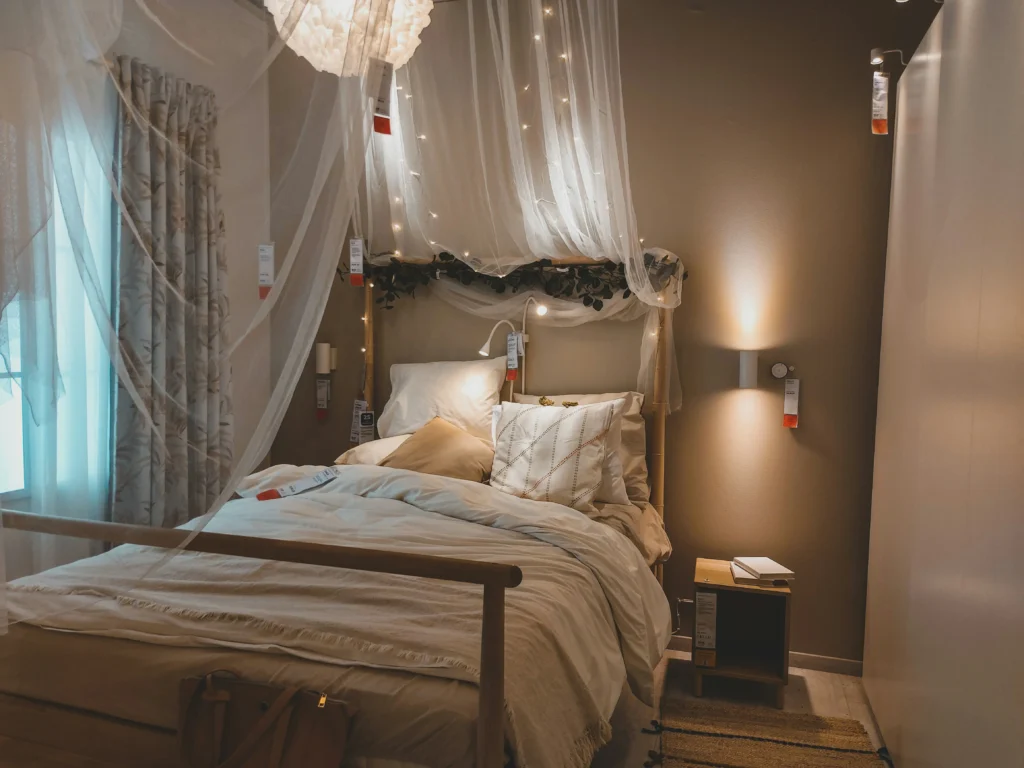
The most effective color choices include warm whites, creamy beiges, soft greige, blush tones, sage green, and pale gray. These colors reflect light gently instead of sharply, making the space feel more peaceful. Keeping walls and large furniture neutral allows smaller decor pieces to blend naturally without visual noise.
Choose Bedding That Looks and Feels Gentle
Your bed is the heart of the bedroom, and nothing defines softness more than layered, inviting bedding. A soft aesthetic relies heavily on fabric choice, texture, and relaxed styling rather than stiff or overly polished looks.
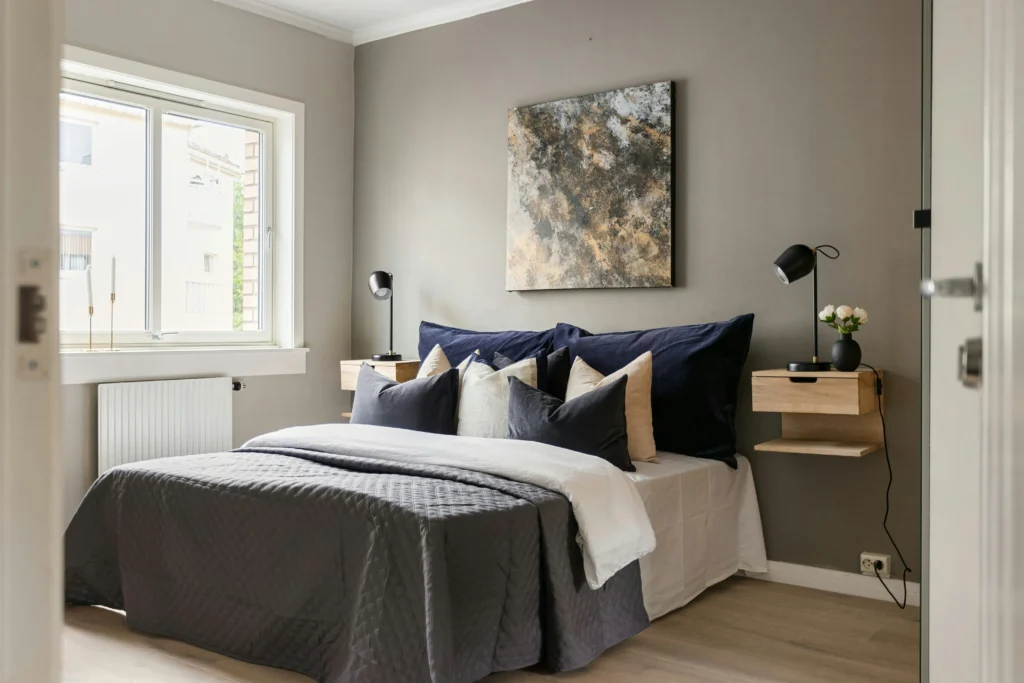
Opt for natural fabrics like cotton, linen, or bamboo blends, which feel breathable and comforting. Layering is key combine fitted sheets, a fluffy duvet, a lightweight throw, and a few neutral pillows. The goal is to make the bed look welcoming, not perfect. Slight wrinkles and loose folds actually enhance the soft, lived-in feel.
Bedding tips for a softer look:
- Stick to neutral or pastel tones
- Mix textures instead of patterns
- Use fewer decorative pillows for a calm finish
Use Warm Low Lighting for Evening Calm
Lighting plays a major role in how peaceful a bedroom feels at night. Bright white or overhead lighting can feel harsh and disrupt relaxation. Soft bedrooms benefit from warm, layered lighting that mimics evening calm.
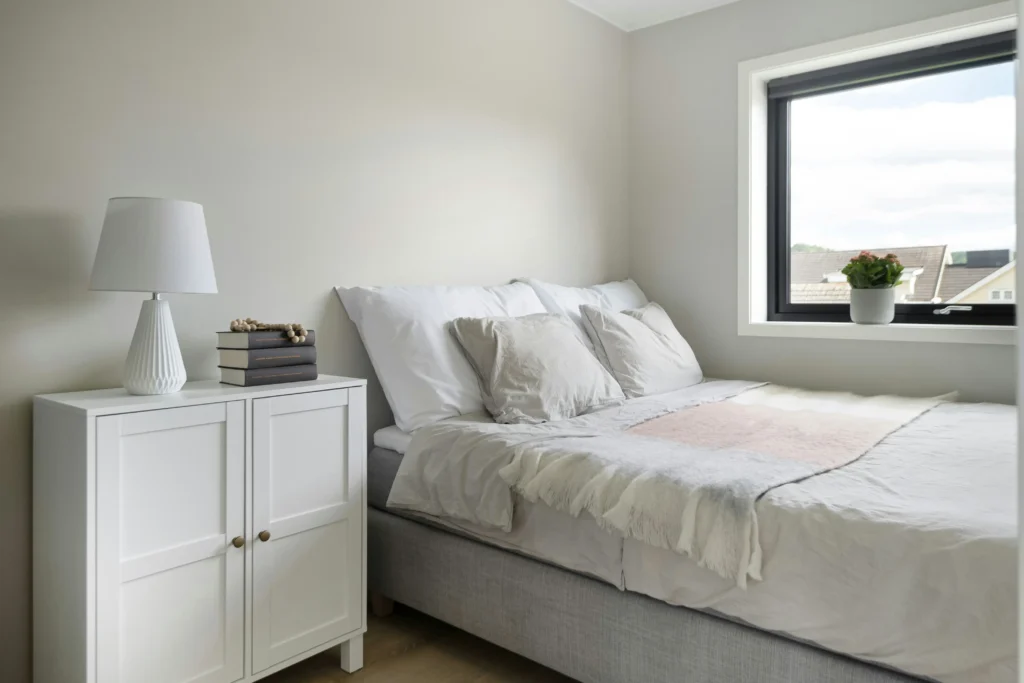
Choose bedside lamps with warm bulbs, wall sconces, or even soft fairy lights for ambient glow. Lamps placed at different heights help balance the room visually and reduce harsh shadows. Warm lighting encourages the body to unwind and signals that it’s time to rest.
Keep Furniture Simple and Light
Heavy or bulky furniture can overpower a bedroom and make it feel crowded. A soft aesthetic works best with furniture that feels visually light and balanced. Clean lines, rounded edges, and neutral finishes help maintain a peaceful flow.
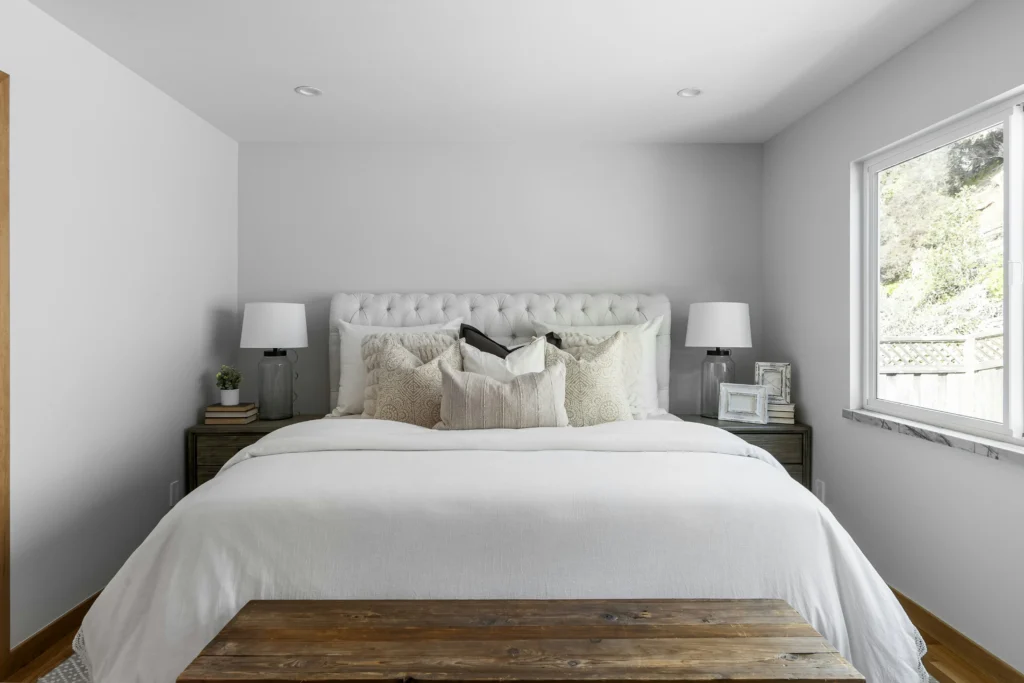
Choose a bed frame with a soft headboard or light wood finish. Nightstands should be functional but minimal, offering storage without visual clutter. When furniture blends into the room instead of dominating it, the space feels calmer and more intentional.
Add Gentle Textures for Comfort and Warmth
Soft bedrooms rely on texture more than decoration. Texture adds depth without noise, making the room feel cozy while remaining simple. Mixing fabrics and finishes creates visual interest without overwhelming the space.
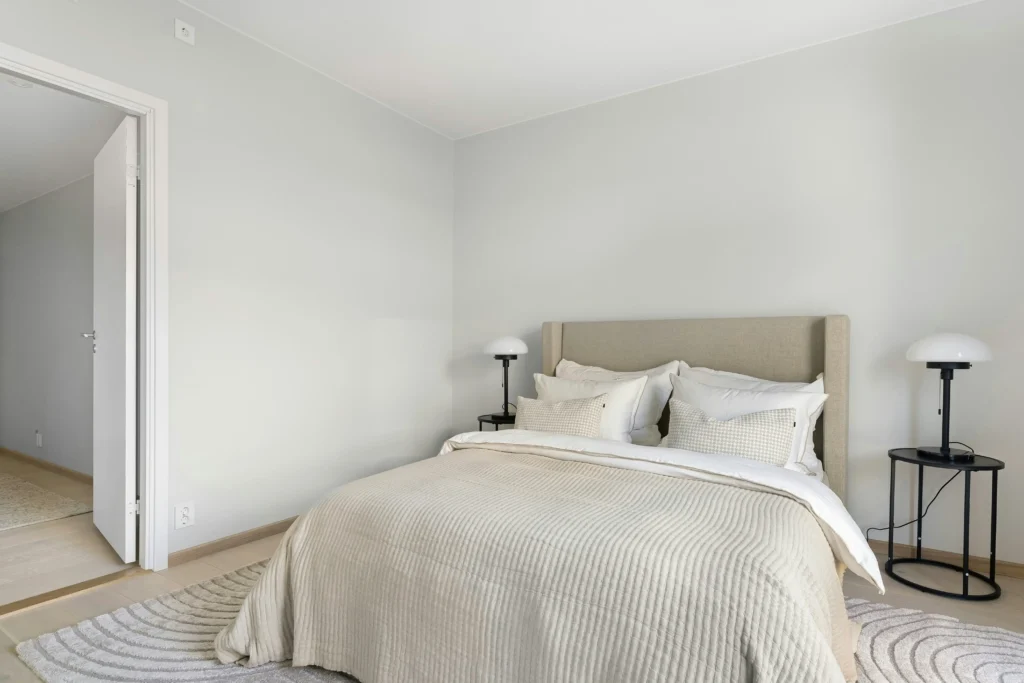
Incorporate textures like knitted throws, woven baskets, linen curtains, plush rugs, or upholstered accents. These elements create warmth and comfort while keeping the overall look minimal. Texture should feel touchable and natural, never shiny or stiff.
Keep Decor Minimal but Meaningful
A peaceful bedroom doesn’t need a lot of decor. In fact, too many accessories can make the space feel restless. Soft aesthetics focus on quality over quantity, choosing pieces that feel intentional and emotionally comforting.
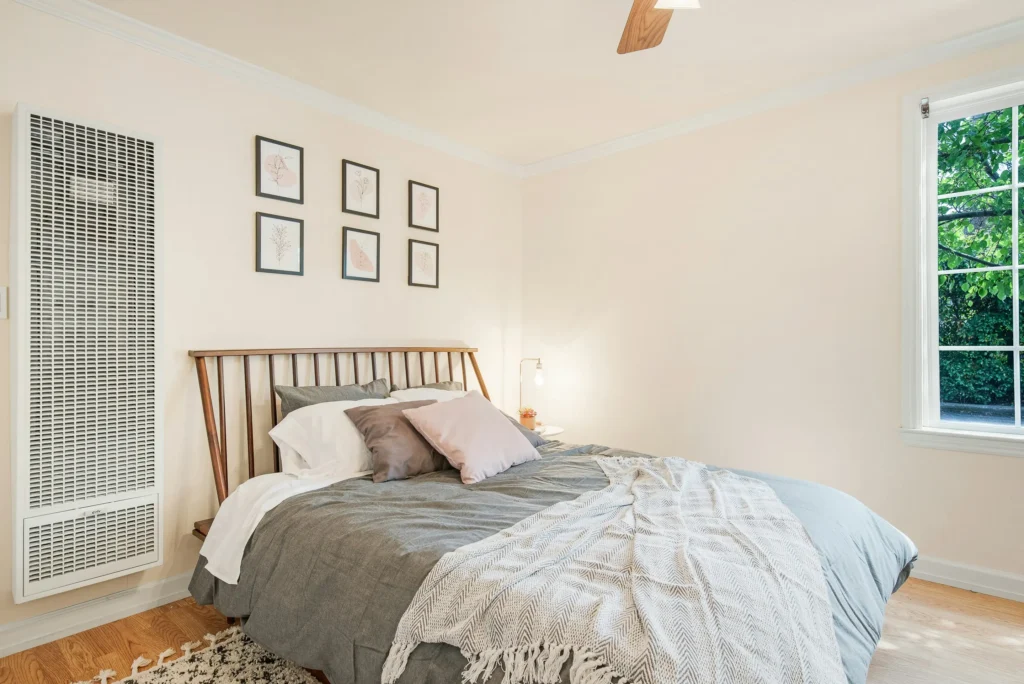
Limit decor to a few meaningful items such as a framed print, a ceramic vase, or a small tray on the nightstand. Open surfaces help the room breathe and allow the eye to rest. When everything has a purpose, the room naturally feels calmer.
Bring in Natural Elements for Balance
Nature has a calming effect, which is why soft bedrooms often include natural materials. Wood, plants, stone, and organic fabrics help ground the space and add warmth without extra decoration.
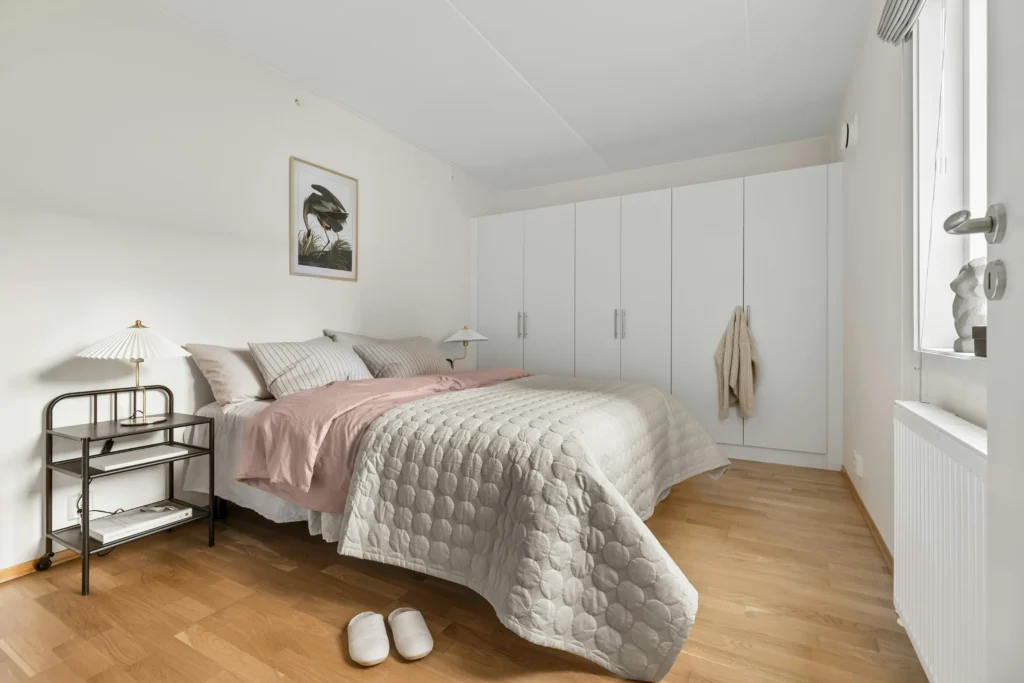
A small plant on a nightstand, a wooden stool, or linen curtains can subtly connect the room to nature. If live plants feel like too much maintenance, dried florals or branches offer the same visual softness with zero effort.
Create a Peaceful Nightstand Setup
Your nightstand is one of the last things you see before sleep, so it should feel calm and uncluttered. A messy nightstand can subconsciously increase stress, while a soft setup encourages relaxation.
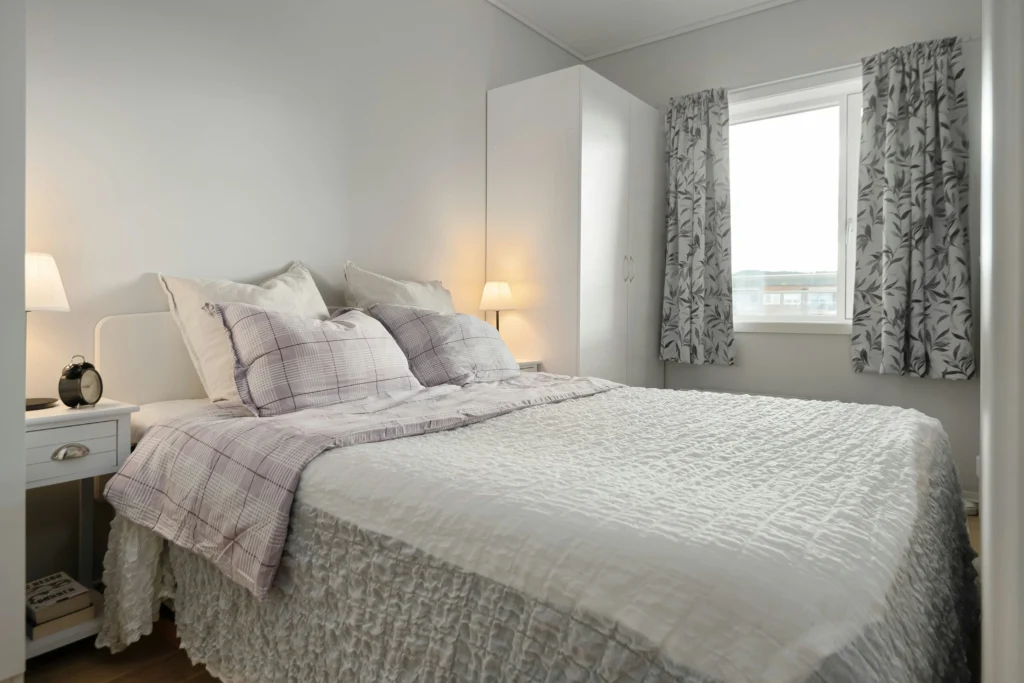
Keep only the essentials: a lamp, a book, a candle, and maybe a small dish for jewelry. Neutral colors and soft materials work best here. The goal is to create a space that feels intentional and soothing, not busy.
Use Curtains and Rugs to Soften the Room
Soft furnishings like curtains and rugs make a bedroom feel complete and cozy. Bare windows or floors can feel cold and unfinished, disrupting the peaceful aesthetic.
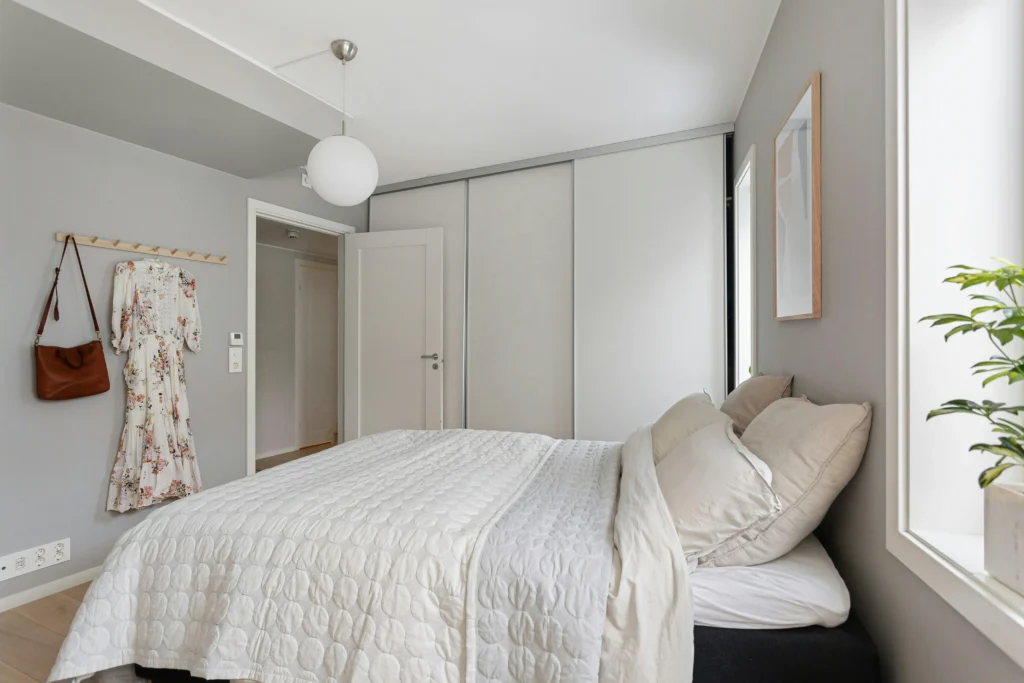
Choose light, flowy curtains that filter natural light instead of blocking it completely. Rugs should feel plush underfoot and extend beyond the bed to visually anchor the space. Neutral rugs with subtle texture work best for maintaining softness.
Declutter to Support Restful Sleep
Clutter creates mental noise, even when you’re not consciously aware of it. A soft bedroom aesthetic depends heavily on keeping the space tidy and well organized.
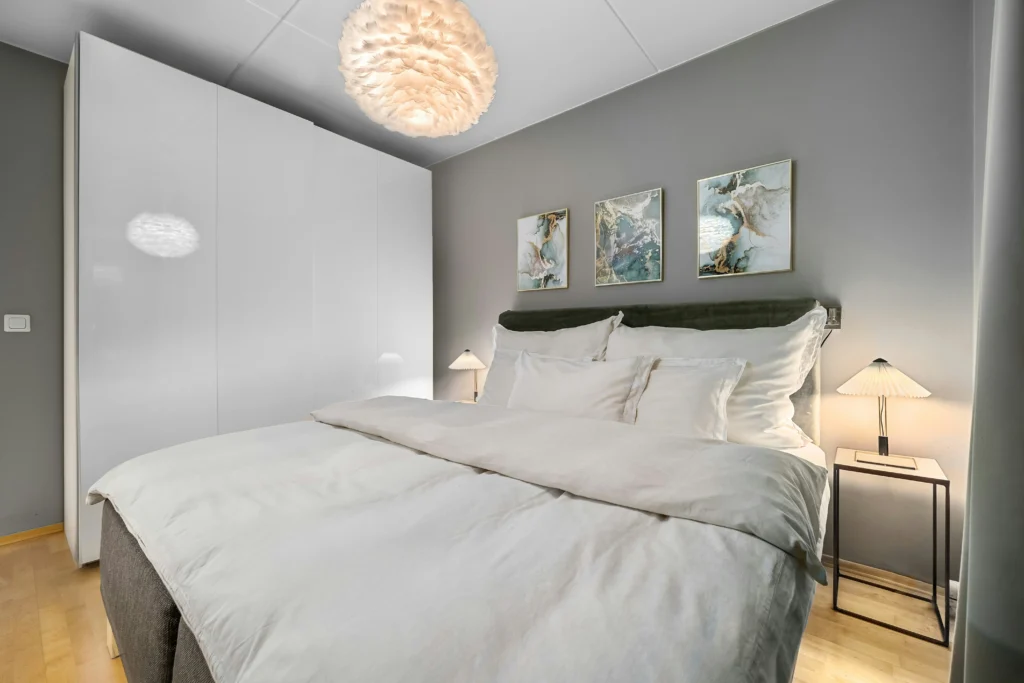
Use hidden storage solutions like under-bed boxes, baskets, or drawers to keep items out of sight. Clear floors and surfaces help the room feel open and restful. The simpler the space, the easier it is for your mind to relax.
Style the Walls Lightly and Thoughtfully
Walls should enhance calm, not demand attention. Avoid overly bold art or busy gallery walls in a soft bedroom. Instead, choose one or two calming pieces that support the overall mood.
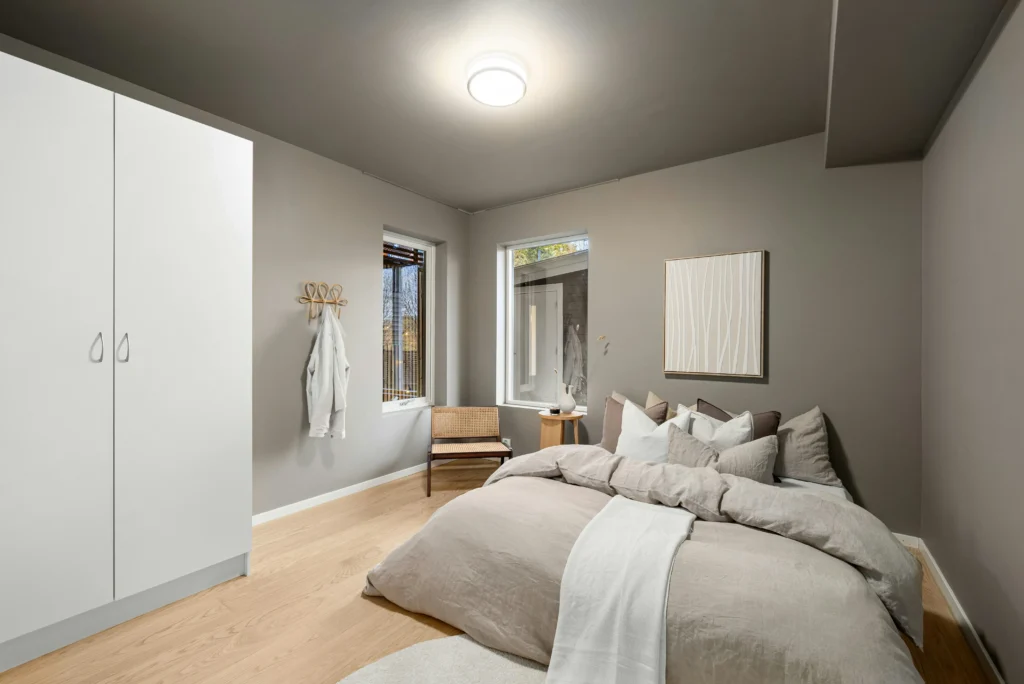
Soft abstract prints, minimal photography, or neutral wall art works beautifully. Position artwork at eye level and leave breathing space around it. Empty wall space isn’t wasted it contributes to peace.
Let the Bedroom Feel Personal Not Perfect
A soft bedroom aesthetic should feel comforting, not staged. Personal touches like a favorite book, a familiar scent, or a meaningful object make the space emotionally grounding.
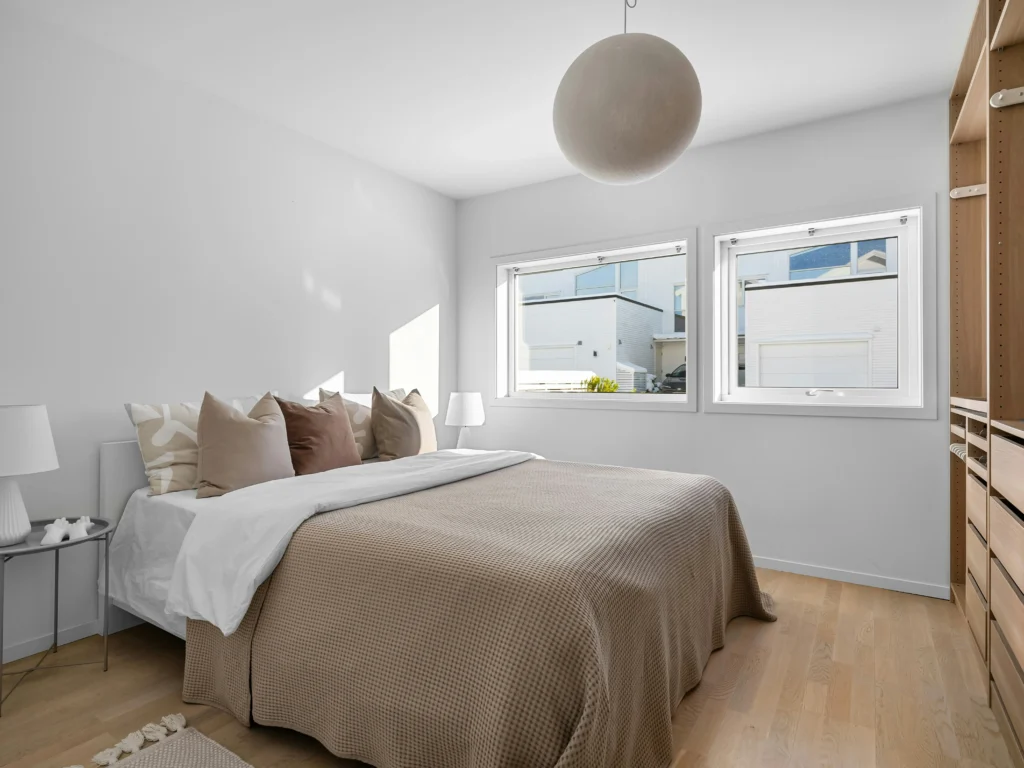
The most peaceful bedrooms reflect the person who sleeps there. When the room feels safe, gentle, and familiar, it naturally supports deeper rest and calmer nights.


