
19 Green And Burgundy Kitchen Ideas That Are Trending Now
Green and burgundy kitchens are becoming one of the most admired design trends for homeowners who want a bold yet refined look. The combination of deep green tones with rich burgundy shades creates a warm, luxurious atmosphere that feels both modern and timeless. This color pairing works beautifully across different kitchen styles, whether you prefer a minimalist layout or a more traditional setup with decorative detailing. The contrast between these two colors brings depth, personality, and visual interest to the heart of the home.
Pinterest audiences are especially drawn to green and burgundy kitchens because they offer endless inspiration for creative styling. From cabinetry and wall colors to accessories, lighting, and textures, this palette allows you to design a space that feels curated and expressive. Whether you are renovating a full kitchen or simply adding accent pieces, these ideas can help you achieve a cohesive and aesthetically pleasing environment that stands out while still feeling comfortable and inviting.
GREEN & BURGUNDY KITCHEN: RICH CONTRAST
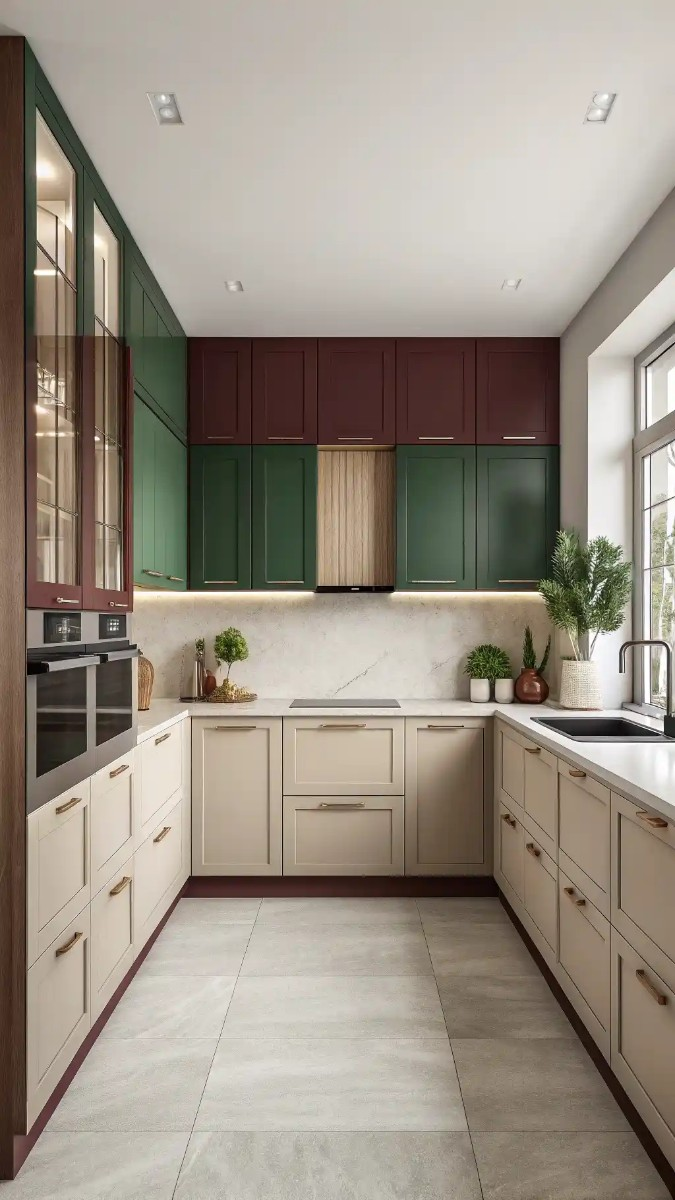
A green and burgundy kitchen built around rich contrast focuses on balancing deep, saturated tones in a way that feels intentional and visually appealing. Dark green cabinetry paired with burgundy accents creates a layered effect that instantly elevates the overall look of the kitchen. The richness of these colors works especially well with matte finishes, natural wood elements, and subtle metallic details such as brushed brass or gold hardware. This combination helps soften the intensity of the palette while still maintaining a bold and sophisticated presence.
When designing a kitchen with rich contrast, it is important to distribute the colors thoughtfully throughout the space. For example, green can be used as the dominant shade for cabinets or walls, while burgundy appears in smaller elements such as bar stools, backsplash tiles, or decorative accessories. This approach ensures that the kitchen does not feel overwhelming while still allowing each color to shine. Lighting also plays a key role here, as warm ambient lighting can enhance the depth of both tones and highlight textures in the materials used.
Textures further enhance the richness of this design style by adding dimension and character. Consider incorporating natural stone countertops, wooden shelves, or patterned tiles to complement the color palette. Soft textiles like curtains, seat cushions, or rugs in neutral or complementary tones can also help balance the boldness of green and burgundy. By carefully combining color, texture, and lighting, this style creates a kitchen that feels luxurious, inviting, and visually cohesive.
ELEGANT CONTRAST: GREEN & BURGUNDY
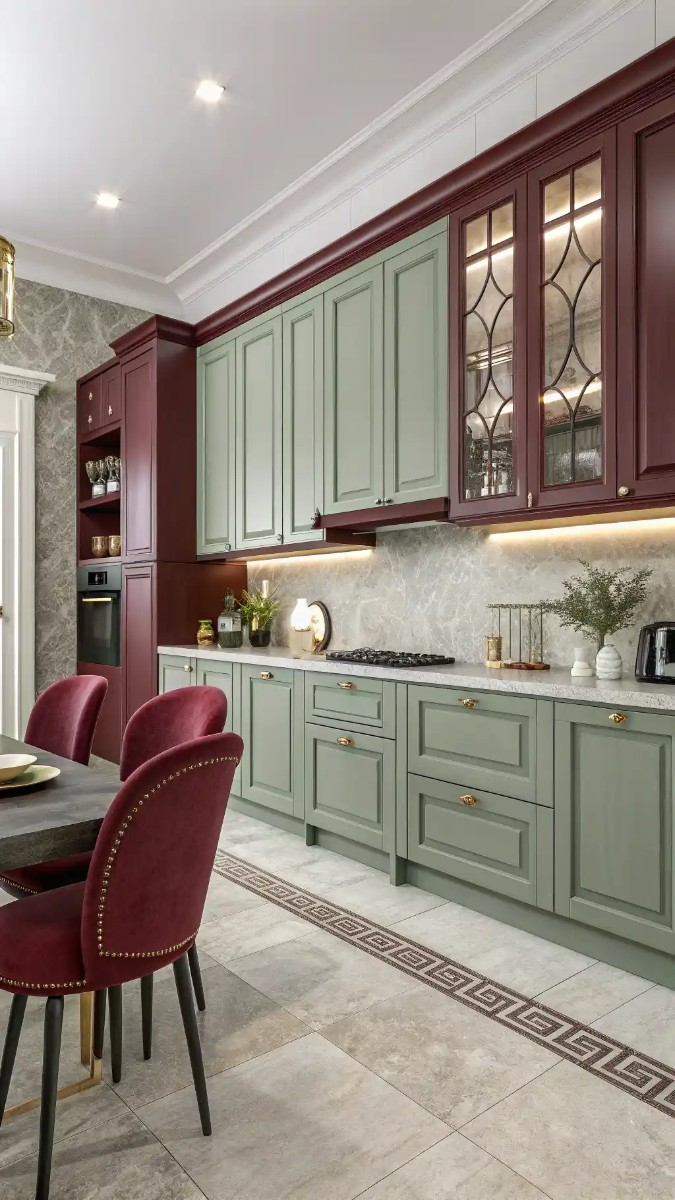
An elegant contrast between green and burgundy focuses on creating a refined and polished kitchen environment that feels both stylish and timeless. In this approach, softer shades of green, such as sage or olive, are often paired with deeper burgundy tones to create a subtle yet impactful contrast. This pairing works particularly well in kitchens that aim for a sophisticated ambiance without appearing overly dramatic. The result is a space that feels calm, balanced, and visually pleasing.
To achieve elegance in this color scheme, attention to detail is essential. Clean lines in cabinetry, minimal clutter, and carefully selected decor pieces all contribute to a refined aesthetic. Burgundy can be introduced through elements like upholstered seating, decorative bowls, or even small appliances, while green remains the foundation through cabinetry or wall paint. This balance ensures that neither color dominates excessively, allowing the design to maintain harmony throughout the space.
Material choices also play a significant role in enhancing the elegance of this contrast. Marble or quartz countertops with subtle veining can complement both colors beautifully, while glass or ceramic finishes add a touch of sophistication. Incorporating reflective surfaces such as polished hardware or pendant lighting can further elevate the overall look. The combination of thoughtful color placement and high quality materials results in a kitchen that feels elegant, inviting, and perfectly suited for both everyday use and entertaining guests.
GREEN & BURGUNDY KITCHEN – CHIC VIBES
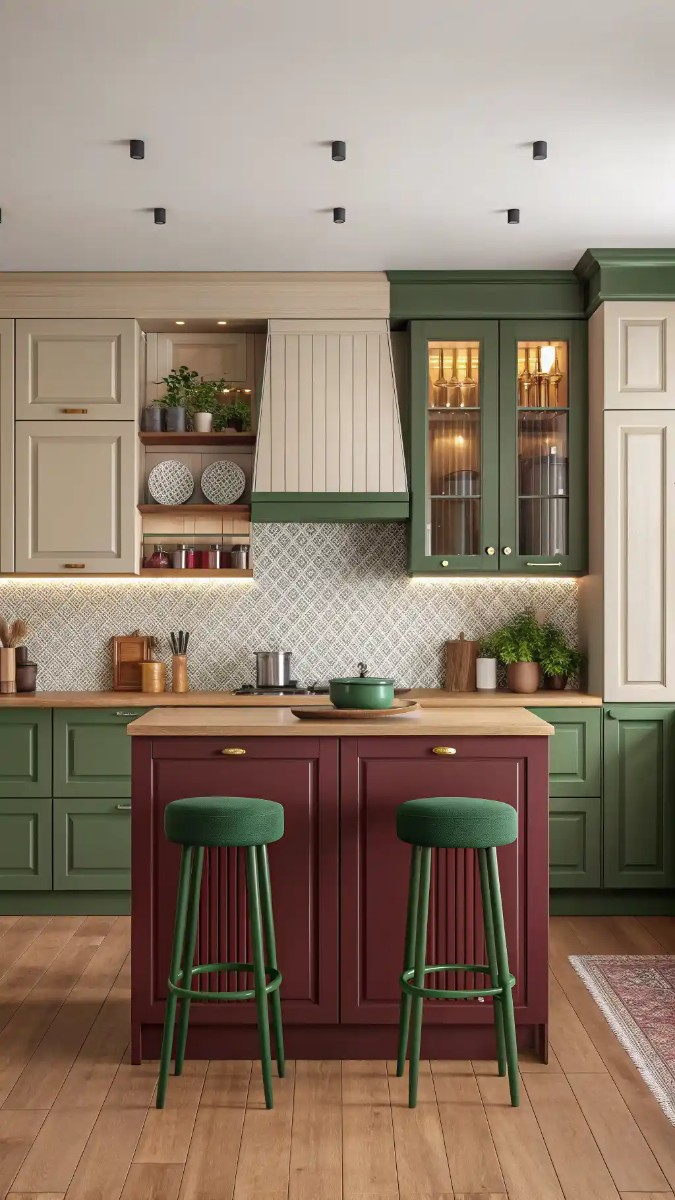
A green and burgundy kitchen designed with chic vibes embraces a modern, stylish approach that feels fresh and on trend. This concept often blends bold color choices with contemporary design elements such as sleek cabinetry, open shelving, and streamlined layouts. The use of vibrant green as a primary color paired with rich burgundy accents creates a playful yet balanced aesthetic that appeals to Pinterest inspired design lovers. This style is perfect for those who want their kitchen to feel both fashionable and functional.
In a chic kitchen setup, contrast is used strategically to highlight key areas of the space. For example, green cabinetry can serve as a backdrop while burgundy appears in statement pieces like bar stools, decorative vases, or backsplash patterns. This selective use of color helps maintain a clean and uncluttered appearance while still allowing personality to shine through. Neutral tones such as white, beige, or light gray can also be introduced to soften the palette and create breathing room within the design.
Accessories and lighting further contribute to the chic atmosphere of this kitchen style. Pendant lights with modern designs, sleek handles, and minimalistic decor pieces all help reinforce the contemporary feel. Incorporating plants or natural elements can also enhance the green tones while adding freshness to the environment. The overall result is a kitchen that feels vibrant, stylish, and effortlessly put together, making it a perfect choice for those who appreciate modern aesthetics with a bold color twist.
GREEN & BURGUNDY KITCHEN: SOPHISTICATED
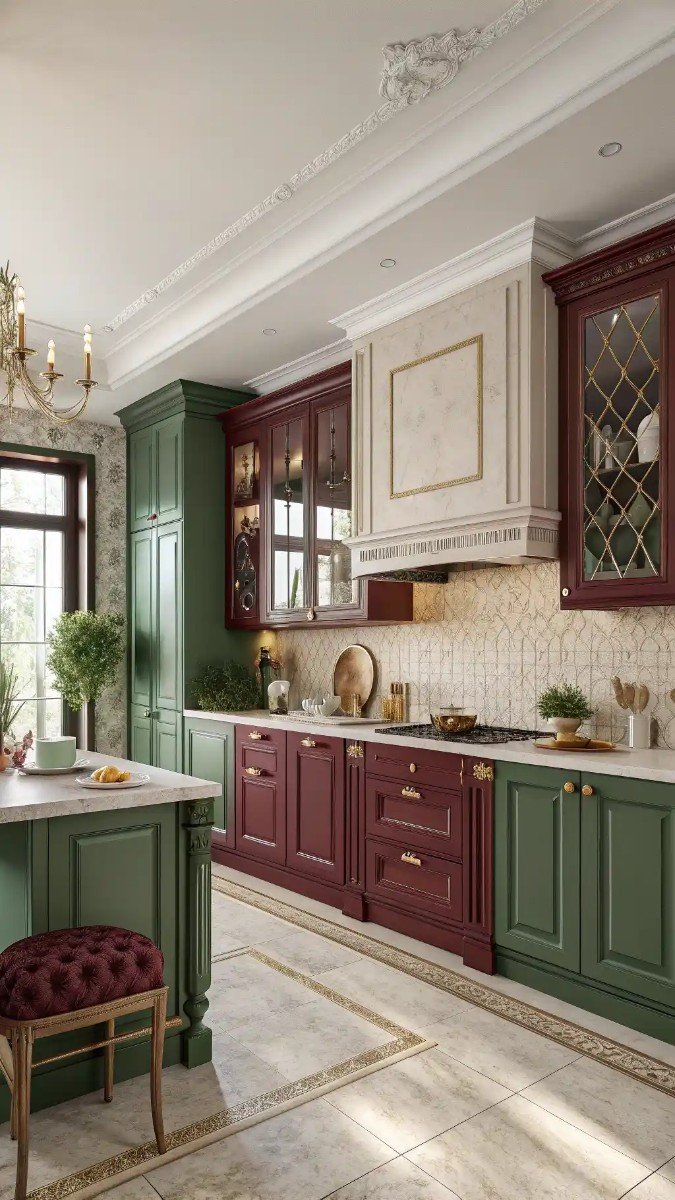
Creating a sophisticated green and burgundy kitchen is all about achieving balance between depth, refinement, and visual harmony. In this design approach, deep green cabinetry often serves as the foundation of the space, offering a grounded and calming presence. Burgundy is then introduced through carefully chosen accents such as seating, decor pieces, or backsplash details. The combination of these two rich tones produces an atmosphere that feels curated and intentional rather than overwhelming. When paired with clean lines and minimal clutter, the overall aesthetic leans toward elegance while still maintaining a bold identity that stands out.
To elevate sophistication further, material selection becomes a key factor in shaping the kitchen’s personality. High quality finishes such as marble countertops, matte cabinets, and brushed metal fixtures contribute to a polished and cohesive look. Soft lighting, particularly warm toned ambient lighting, enhances the richness of both green and burgundy by adding depth and warmth to the environment. This lighting approach prevents the darker tones from feeling heavy while highlighting textures and subtle design details throughout the space. The result is a kitchen that feels inviting yet refined, perfect for both everyday use and entertaining guests.
Another important aspect of this sophisticated style is consistency in design elements. Repeating tones and materials across different parts of the kitchen helps maintain visual unity. For example, burgundy elements can appear in multiple small touches such as stools, artwork, or kitchenware, while green remains dominant in cabinetry or wall finishes. Neutral colors like cream, beige, or soft gray can be used to soften transitions between these bold shades. By maintaining a thoughtful balance and avoiding visual clutter, the kitchen achieves a sophisticated ambiance that feels timeless, elegant, and well designed.
RICH TONES & MODERN KITCHEN
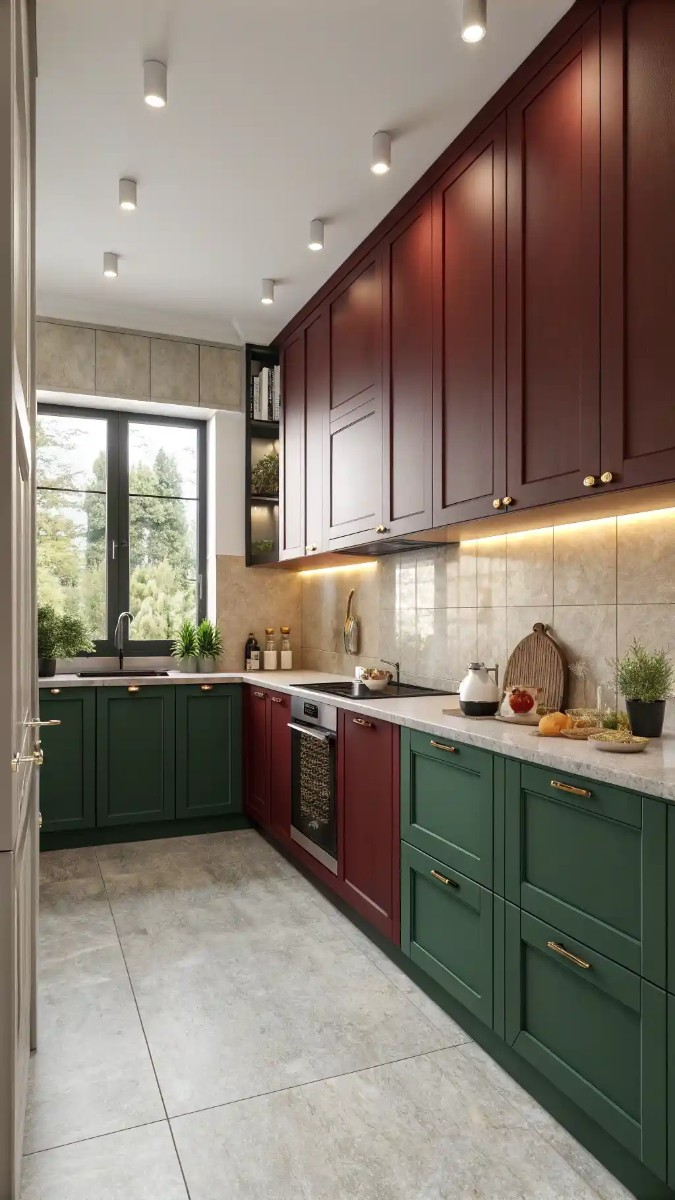
A modern kitchen that embraces rich tones like green and burgundy focuses on combining contemporary design principles with bold color choices. Clean lines, flat panel cabinetry, and minimalist layouts form the backbone of this style, while the colors themselves bring personality and warmth into the space. Deep green is often used for larger surfaces such as cabinets or islands, while burgundy is applied in smaller yet impactful details. This creates a visually dynamic environment that still aligns with modern design aesthetics, which prioritize simplicity and functionality alongside style.
Incorporating rich tones into a modern kitchen requires careful attention to proportion and placement. Too much of either color can overwhelm the space, so designers often use one as the dominant shade and the other as an accent. For example, a green kitchen island paired with burgundy bar stools or accessories can create a striking focal point without disrupting the clean modern look. Open shelving, integrated appliances, and handleless cabinets further enhance the streamlined appearance while allowing the color palette to remain the main visual highlight of the room.
Textures and finishes also play a significant role in modern kitchens featuring rich tones. Matte surfaces are particularly popular as they reduce glare and create a soft, sophisticated appearance. Pairing matte cabinetry with glossy tiles or reflective surfaces introduces subtle contrast that adds depth without cluttering the design. Metallic accents in finishes such as black, gold, or stainless steel can further complement the color scheme while maintaining a modern edge. The combination of rich tones and contemporary elements results in a kitchen that feels stylish, functional, and visually engaging, making it a perfect choice for those who appreciate modern living with a bold color identity.
GREEN & BURGUNDY KITCHEN & MODERN ELEGANCE
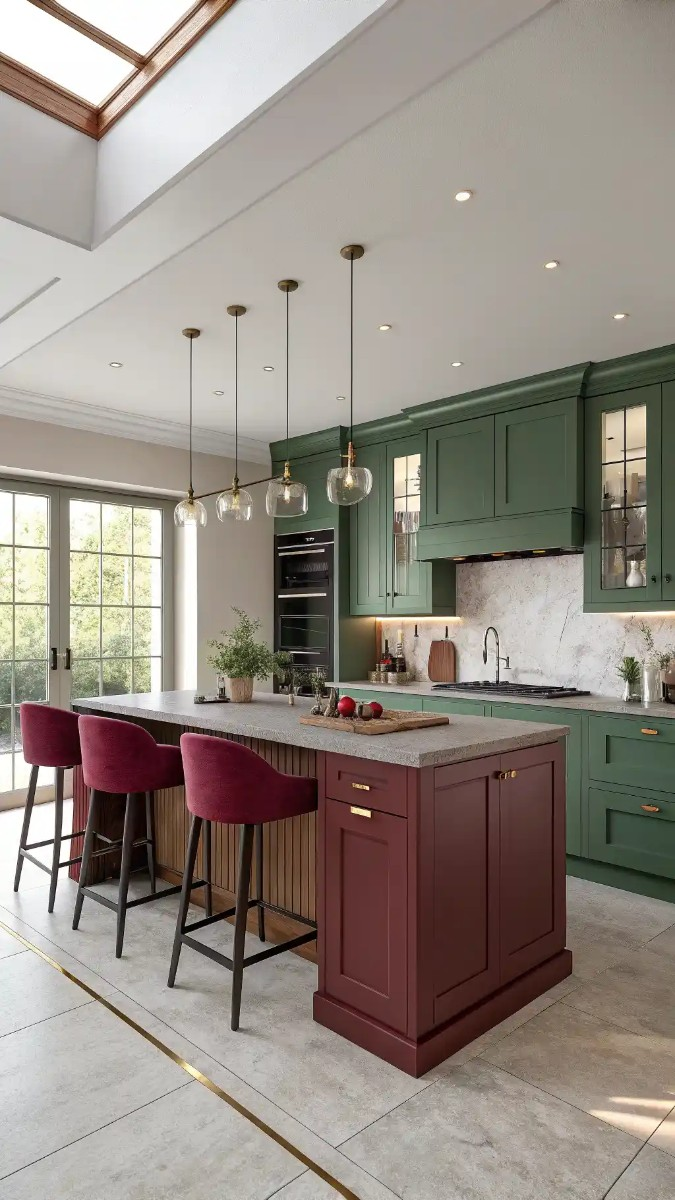
Modern elegance in a green and burgundy kitchen is achieved by blending refined design principles with a carefully curated color palette. This style emphasizes simplicity, symmetry, and a sense of balance while allowing the richness of the colors to stand out. Green often serves as the primary tone, used in cabinetry or wall finishes, while burgundy appears as a complementary accent that adds warmth and depth. Together, these colors create a sophisticated environment that feels both contemporary and timeless, making the kitchen a visually appealing centerpiece of the home.
To enhance modern elegance, attention to layout and spatial organization is essential. A well structured kitchen with clear zones for cooking, preparation, and storage contributes to a seamless user experience. Minimalist decor, uncluttered countertops, and integrated storage solutions help maintain a clean and polished appearance. Burgundy elements can be introduced subtly through decor items such as vases, textiles, or seating, ensuring that the space remains balanced and not overly saturated with color. This controlled use of accents allows the design to feel intentional and harmonious.
Lighting and finishes further elevate the sense of modern elegance in this kitchen style. Pendant lights with sleek designs, under cabinet lighting, and natural light sources all contribute to a bright and inviting atmosphere. Combining these lighting elements with high quality materials such as quartz countertops, glass backsplashes, and smooth cabinetry finishes enhances the overall aesthetic. The interplay between rich colors, refined materials, and thoughtful design choices results in a kitchen that feels elegant, modern, and highly functional. This approach is ideal for those who want a space that reflects both personal style and contemporary sophistication while remaining practical for daily use.
GREEN & BURGUNDY KITCHEN ACCENTS
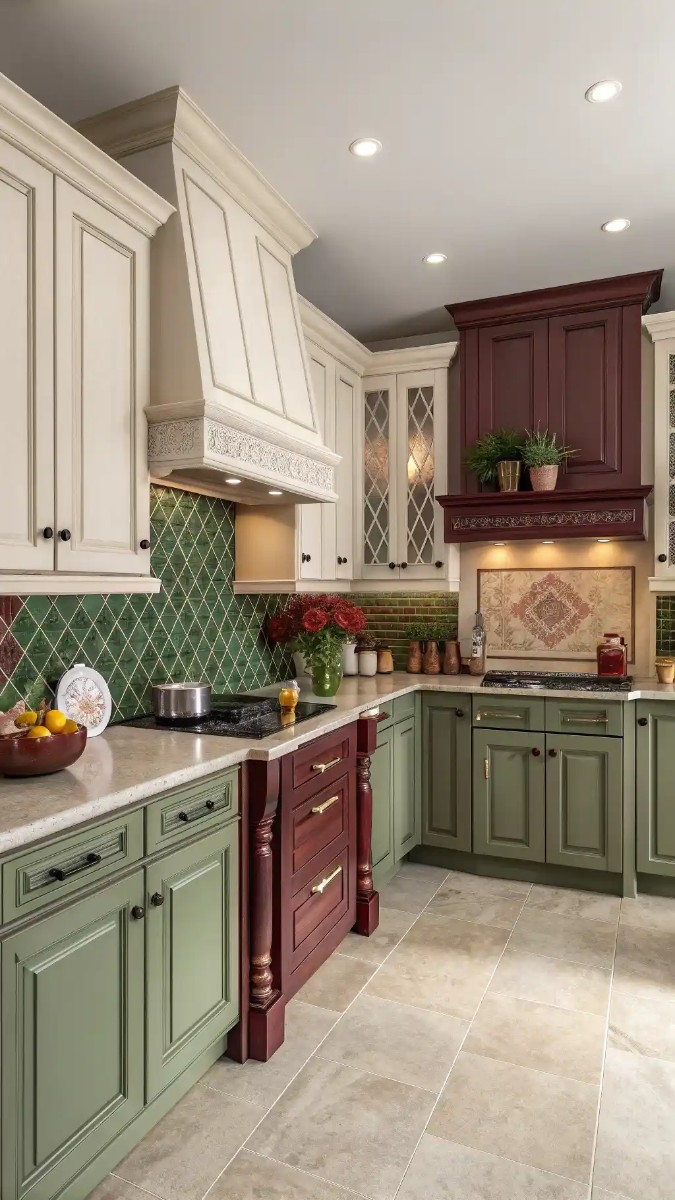
Using green and burgundy as accents in a kitchen is an effective way to introduce color without overwhelming the overall design. This approach works especially well in neutral kitchens where shades like white, beige, or light gray form the base. By adding green and burgundy through smaller elements, you can instantly elevate the visual appeal of the space while maintaining a clean and balanced environment. Accent pieces allow flexibility, making it easier to update or refresh the kitchen style over time without major renovations.
Incorporating these accents can be done in a variety of creative ways. For instance, green can appear through decorative plants, bar stools, or cabinet details, while burgundy can be introduced through textiles such as seat cushions, curtains, or kitchen rugs. Even small appliances or tableware in these tones can contribute to the overall theme. The key is to distribute the colors evenly across the space so that one does not overpower the other. This balanced approach helps create a cohesive look that feels intentional and visually pleasing.
Textures and layering also play an important role when working with accent colors. Mixing materials like wood, metal, glass, and fabric allows the green and burgundy tones to stand out more effectively. For example, a burgundy chair placed against a green backdrop or a green plant on a burgundy countertop accessory can create subtle yet eye catching contrasts. These small but thoughtful additions help tie the entire kitchen together while maintaining a sense of simplicity and elegance.
DEEP DEPTHS & RICH TEXTURES
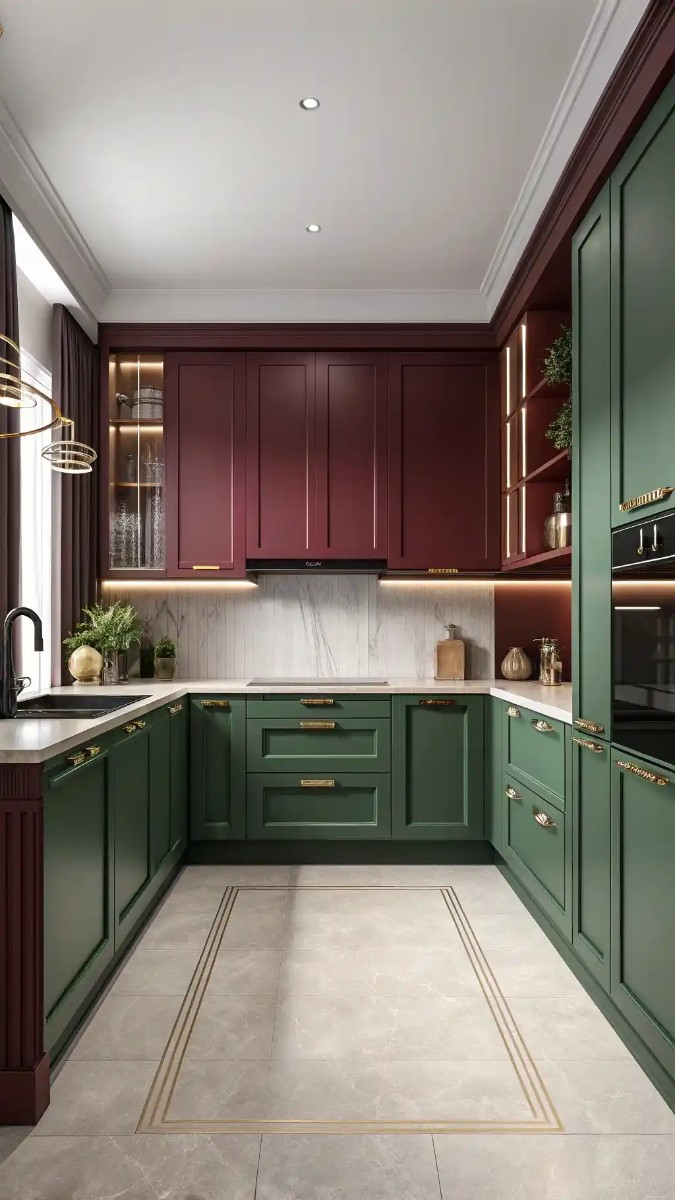
A kitchen designed with deep depths and rich textures focuses on creating a layered and immersive environment where color and material work together harmoniously. In this style, dark green cabinetry often forms the base, while burgundy elements enhance the depth and visual richness of the space. The combination of these tones naturally creates a cozy and inviting atmosphere, especially when paired with materials that have tactile and visual variation. This approach is ideal for those who appreciate a kitchen that feels warm, grounded, and full of character.
Textures play a crucial role in bringing this concept to life. Surfaces such as natural wood, stone countertops, patterned tiles, and fabric elements add dimension and prevent the space from feeling flat. Matte finishes on cabinets can contrast beautifully with glossy tiles or polished stone, creating subtle visual interest. Burgundy can be incorporated through textured fabrics like upholstered seating or woven decor pieces, while green remains dominant in structural elements. The interplay of these materials enhances the richness of the color palette and gives the kitchen a more dynamic and engaging feel.
Lighting is another essential component when working with deep tones and rich textures. Soft, warm lighting helps highlight the details of each material while preventing darker colors from appearing too heavy. Layered lighting, including pendant lights, under cabinet lighting, and ambient fixtures, can help define different areas within the kitchen. When combined with carefully chosen textures and a balanced color scheme, the result is a space that feels luxurious, comfortable, and visually captivating from every angle.
ELEGANT GREEN & BURGUNDY KITCHEN
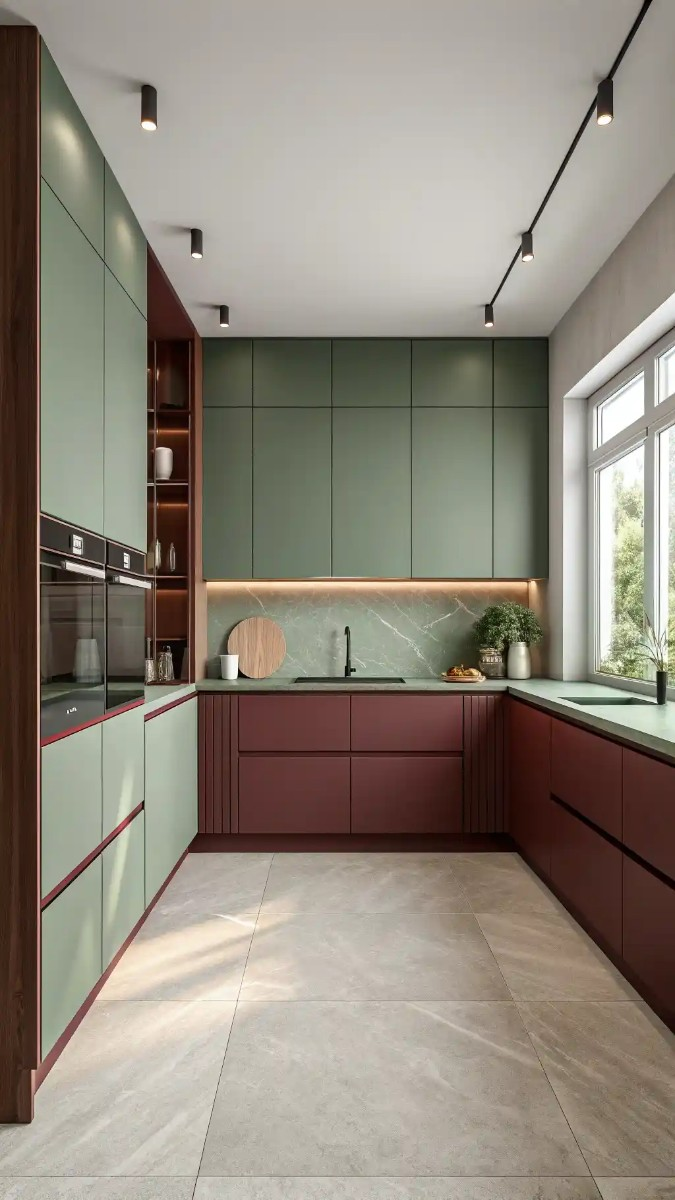
An elegant green and burgundy kitchen focuses on creating a refined and timeless atmosphere through a harmonious blend of color, design, and materials. Soft or muted shades of green are often used as the primary color, providing a calm and soothing backdrop. Burgundy then adds a touch of richness and depth, appearing in select elements that enhance the overall aesthetic without dominating the space. This combination works beautifully in kitchens that aim for a classic yet modern elegance.
To achieve elegance in this design style, simplicity and balance are essential. Clean cabinetry, uncluttered surfaces, and carefully selected decor help maintain a polished appearance. Green cabinetry can be paired with subtle burgundy accents such as decorative items, seating, or backsplash details. Neutral tones like cream, ivory, or light gray can also be incorporated to soften the contrast and create smooth transitions between the two colors. This layered approach ensures that the kitchen feels cohesive and visually pleasing rather than busy or chaotic.
Material choices further define the elegance of the space. High quality finishes such as quartz or marble countertops, sleek hardware, and smooth cabinetry surfaces contribute to a refined look. Incorporating reflective elements like glass or metallic accents can also enhance the brightness of the kitchen while complementing the rich color palette. When combined thoughtfully, these elements create a kitchen that feels sophisticated, balanced, and inviting, making it suitable for both everyday cooking and stylish entertaining.
EMERALD GREEN & BURGUNDY KITCHEN
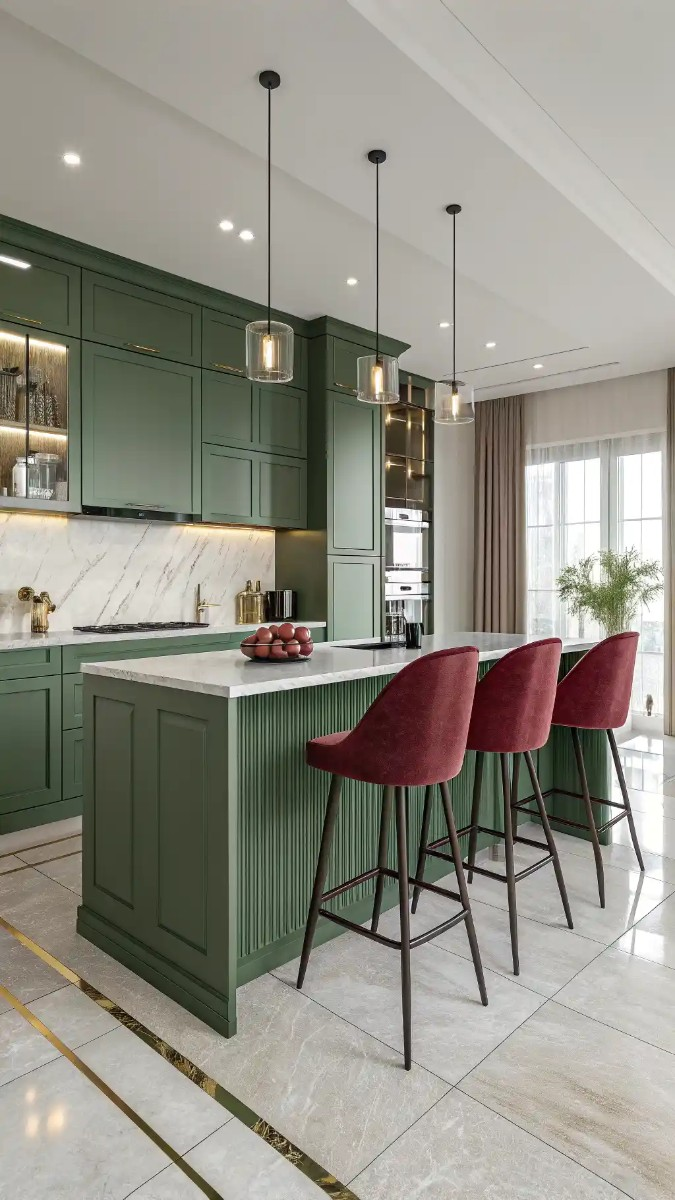
An emerald green and burgundy kitchen brings a luxurious and eye catching aesthetic that feels both bold and refined. Emerald green, with its deep jewel toned richness, naturally becomes the focal point of the space, especially when used on cabinetry or a kitchen island. Burgundy complements this beautifully by adding warmth and depth, creating a layered contrast that feels intentional and stylish. Together, these colors evoke a sense of opulence while still maintaining a grounded and inviting atmosphere that works well in both modern and classic interiors.
To design with emerald green and burgundy effectively, it is important to maintain balance and avoid overloading the space with too much intensity. Emerald green can dominate larger surfaces, while burgundy is best used in accents such as bar stools, decor items, or backsplash details. Neutral elements like white countertops, light wood flooring, or soft gray walls can help break up the richness of the palette and create visual breathing room. This balance ensures that the kitchen feels vibrant without becoming overwhelming, allowing each color to stand out in its own way.
Finishing touches play a significant role in enhancing this color combination. Metallic accents such as gold or brass hardware pair beautifully with emerald green and burgundy, adding a touch of elegance and sophistication. Textures like marble countertops, glass tiles, or matte cabinetry can further elevate the overall design by introducing subtle contrast and depth. When these elements come together, the result is a kitchen that feels luxurious, cohesive, and highly visually appealing, making it a perfect choice for those who want a standout yet harmonious design.
GREEN & BURGUNDY KITCHEN: SOPHISTICATED STYLE
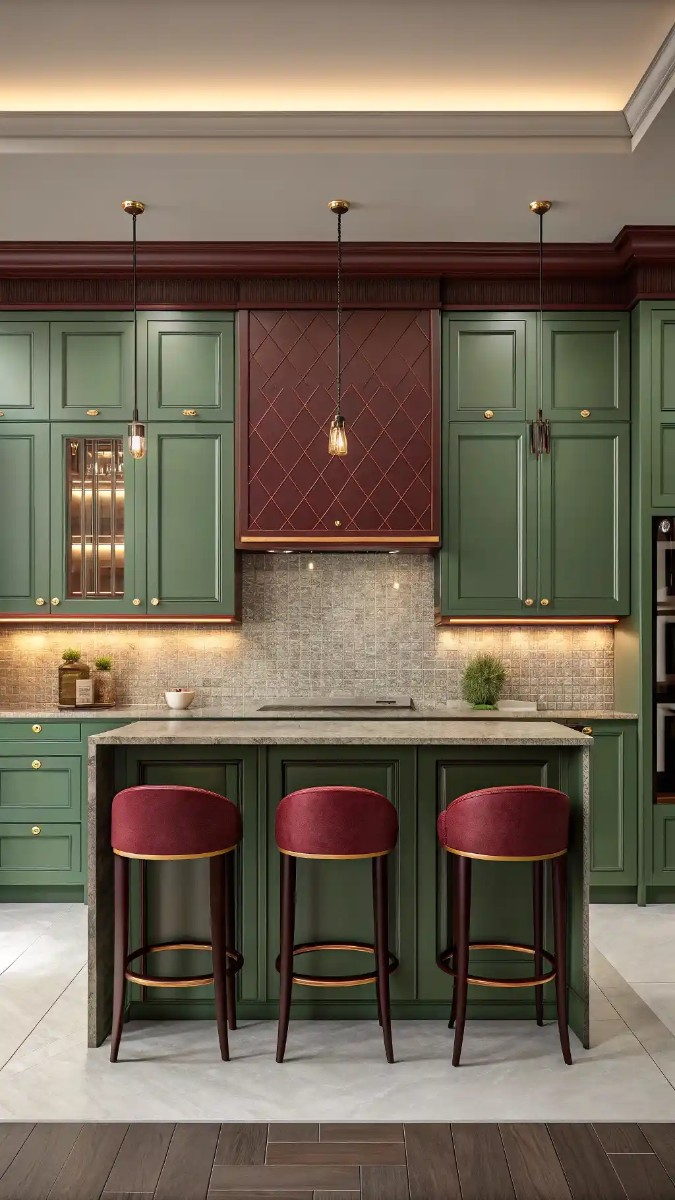
A sophisticated style in green and burgundy kitchens focuses on achieving a refined and well balanced design that feels both modern and timeless. This approach often relies on deep, muted tones of green paired with rich burgundy accents to create a subtle yet impactful contrast. Instead of using bold, high saturation shades everywhere, the sophistication comes from carefully controlling how and where each color is applied. The result is a kitchen that feels calm, structured, and visually pleasing without being overly dramatic.
In this style, cabinetry typically plays a central role in establishing the overall tone of the kitchen. Green cabinets may serve as the primary visual element, while burgundy appears in smaller design features such as seating, decorative accessories, or patterned tiles. This selective use of color helps maintain a clean and organized look. Incorporating neutral tones like beige, cream, or soft white can further enhance the sophistication by softening transitions and preventing the space from feeling too heavy or saturated.
Materials and finishes are equally important in reinforcing the sophisticated style. Smooth cabinetry surfaces, understated hardware, and high quality countertops contribute to a polished and cohesive appearance. Lighting should be soft and layered, with pendant lights or under cabinet lighting helping to highlight textures and colors without overpowering the design. When combined thoughtfully, green and burgundy create a kitchen environment that feels elegant, well balanced, and effortlessly stylish, making it suitable for both everyday living and special occasions.
GREEN & BURGUNDY KITCHEN: SOPHISTICATED BALANCE
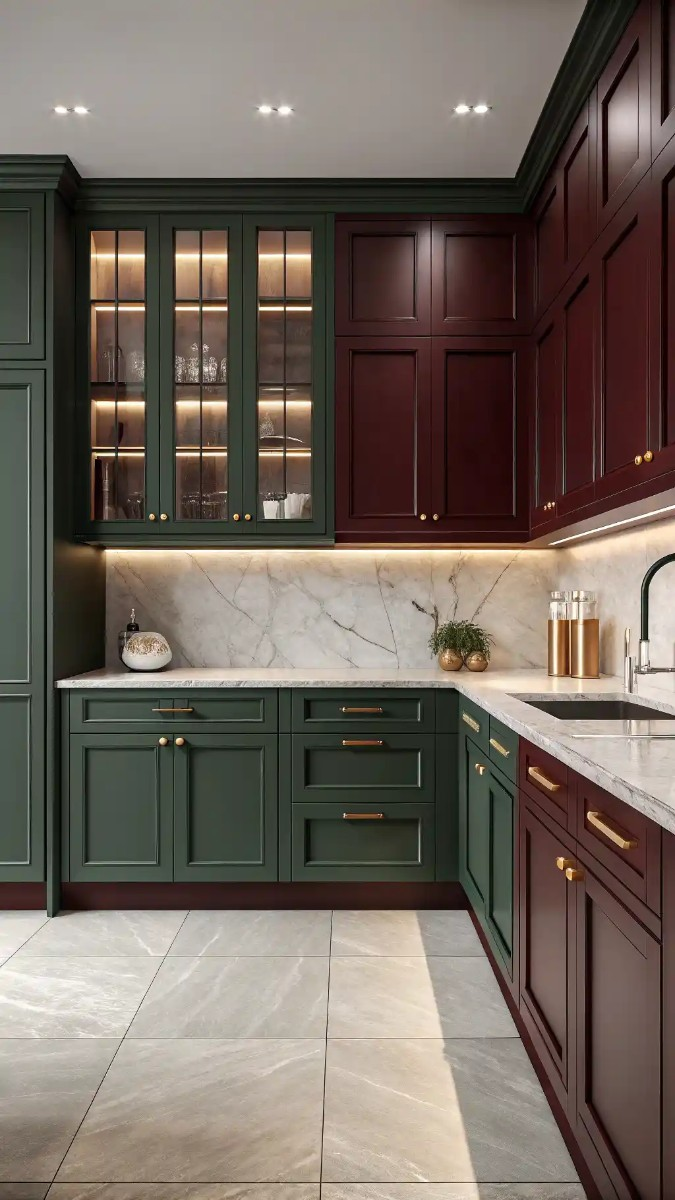
Sophisticated balance in a green and burgundy kitchen is achieved by carefully distributing colors and design elements in a way that feels harmonious and visually stable. Rather than allowing one color to dominate completely, both green and burgundy are used in a complementary manner where each supports the other. This creates a sense of equilibrium that is pleasing to the eye and enhances the overall flow of the kitchen space. The balance between warm burgundy tones and cool green shades results in a dynamic yet cohesive environment.
To maintain this balance, it is important to consider proportion and placement throughout the kitchen. Green is often used as the dominant shade on larger surfaces such as cabinets or walls, while burgundy is introduced in smaller, strategic details. These may include seating, decorative items, or accent panels that subtly echo the primary color palette. Neutral colors also play a supporting role by bridging the gap between green and burgundy, ensuring that the transition between tones feels smooth and natural rather than abrupt.
Attention to symmetry and consistency further strengthens the sense of balance in this design style. Repeating elements such as materials, finishes, or shapes across different parts of the kitchen helps create visual continuity. For example, matching hardware finishes or consistent countertop materials can tie the entire design together. Lighting also contributes to balance by evenly illuminating the space and highlighting both colors equally. When all these elements are thoughtfully combined, the kitchen achieves a sophisticated balance that feels calm, unified, and aesthetically refined.
GREEN & BURGUNDY KITCHEN TEXTURE
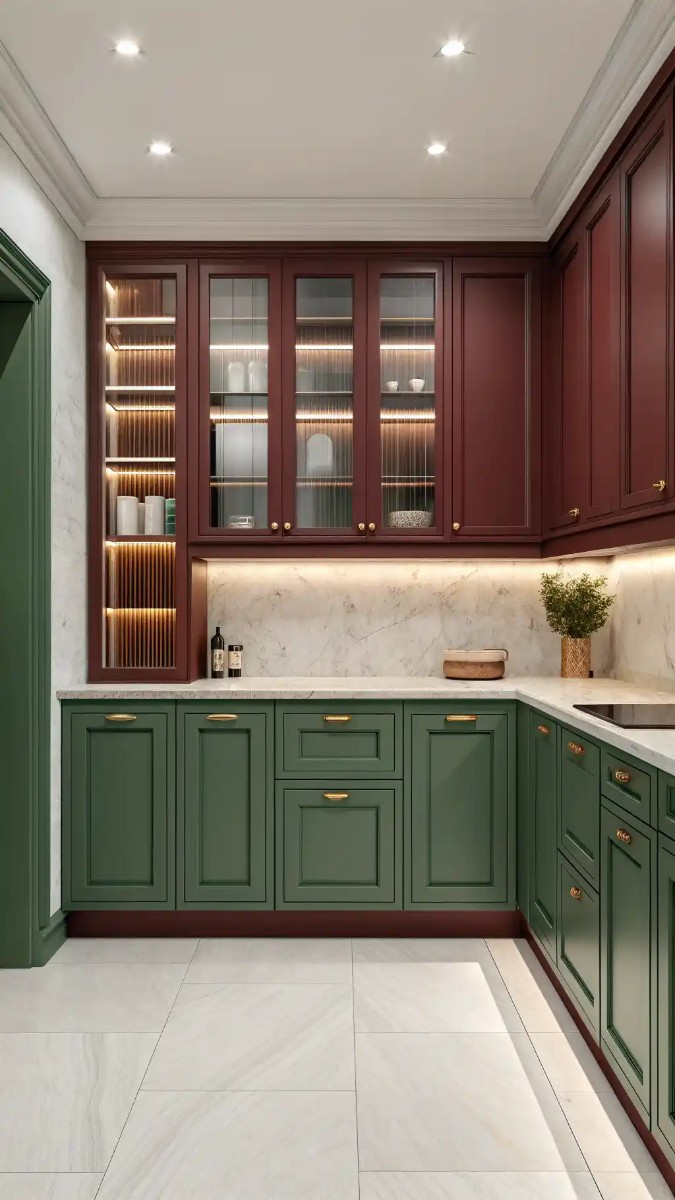
Texture plays a vital role in enhancing the depth and character of a green and burgundy kitchen. While color sets the overall tone, textures bring the design to life by adding layers of visual and tactile interest. Incorporating a mix of smooth, rough, matte, and reflective surfaces allows the space to feel more dynamic and engaging. Green and burgundy tones become even more impactful when paired with materials that highlight their richness and contrast in subtle yet meaningful ways.
A textured kitchen design might include elements such as wooden cabinetry, stone countertops, ceramic tiles, or fabric upholstery. For example, matte green cabinets combined with a glossy backsplash can create a striking contrast, while burgundy accents in upholstered seating or curtains introduce softness into the space. These variations in texture help prevent the kitchen from appearing flat or monotonous, instead giving it a layered and thoughtfully designed look that feels both modern and inviting.
Lighting further enhances the effect of textures by emphasizing surface details and creating depth through shadows and highlights. Warm lighting can bring out the richness of burgundy tones while also softening the appearance of green surfaces. When combined with carefully chosen materials, textures contribute to a kitchen environment that feels warm, balanced, and visually interesting. This approach allows homeowners to create a space that not only looks appealing but also feels comfortable and full of character.
GREEN & BURGUNDY KITCHEN: RICH CONTRAST
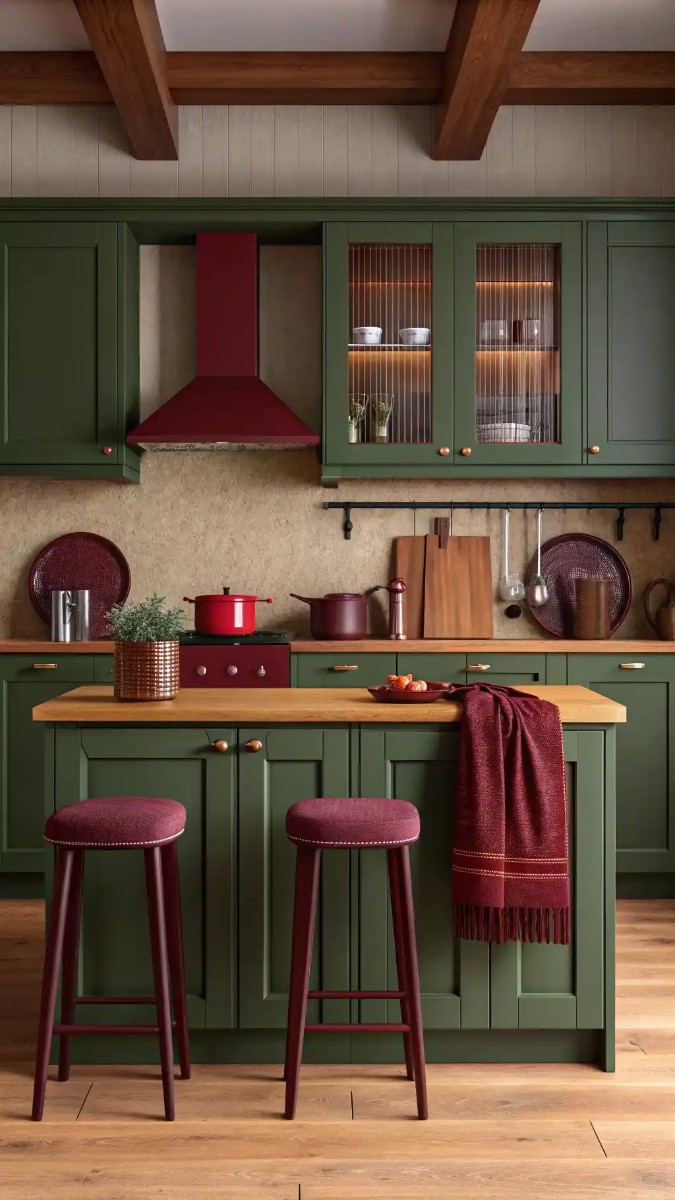
A rich contrast green and burgundy kitchen is designed to make a bold visual statement while still maintaining harmony and balance. The deep tones of green create a grounded foundation, while burgundy introduces warmth and intensity that draws the eye naturally across the space. When these two colors are paired thoughtfully, they produce a layered effect that feels luxurious and expressive. This design approach works especially well in kitchens where the goal is to create a memorable and visually striking environment without sacrificing functionality.
In terms of layout and composition, rich contrast kitchens often rely on a dominant color supported by a secondary accent. Green typically takes the lead on cabinetry, islands, or wall surfaces, while burgundy appears in smaller but impactful details such as seating, backsplash elements, or decorative pieces. This distribution ensures that the kitchen feels cohesive rather than overwhelming. Neutral tones such as white, beige, or light wood can also be introduced to soften the contrast and provide visual breathing space between the two rich colors.
Finishing details are essential when working with rich contrast. Materials like marble countertops, brushed metal hardware, and textured surfaces help bridge the gap between green and burgundy while adding depth to the design. Lighting also plays a crucial role in highlighting the richness of both tones, particularly through warm ambient fixtures and focused task lighting. When combined effectively, this approach creates a kitchen that feels bold, balanced, and full of character, making it a perfect choice for those who appreciate strong yet refined interior design.
GREEN & BURGUNDY KITCHEN: ELEGANT CONTRAST
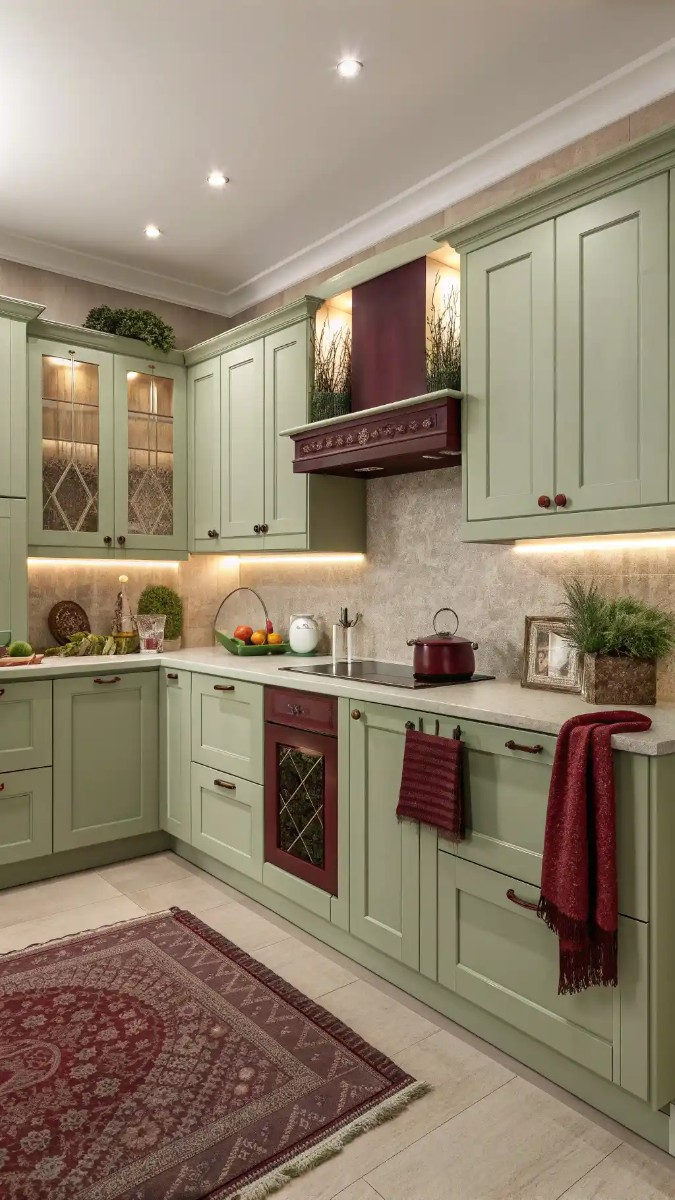
An elegant contrast green and burgundy kitchen focuses on subtlety and refinement rather than bold dominance. Instead of using highly saturated tones throughout the space, this style often incorporates softer variations of green paired with muted burgundy accents. The result is a kitchen that feels calm, composed, and visually harmonious. The elegance comes from how the colors interact rather than how loudly they stand out, making this approach ideal for those who prefer a more understated aesthetic.
To achieve elegant contrast, it is important to maintain a clean and uncluttered layout. Minimalist cabinetry, simple hardware, and well organized surfaces all contribute to a polished look. Green can serve as the primary color through cabinets or walls, while burgundy is introduced in small, deliberate touches such as decorative accessories, seating, or textiles. Neutral tones help tie the palette together, ensuring that the contrast remains soft and balanced rather than sharp or overpowering.
Material selection and lighting further enhance the sense of elegance in this kitchen style. Smooth finishes, subtle textures, and high quality surfaces like quartz or marble countertops add sophistication to the overall design. Soft, warm lighting helps highlight the richness of both colors while creating a welcoming atmosphere. Pendant lights, under cabinet lighting, and natural light sources all contribute to a layered lighting scheme that enhances depth and clarity. When all elements are thoughtfully combined, the kitchen achieves an elegant contrast that feels timeless, refined, and visually appealing.
GREEN & BURGUNDY KITCHEN & ELEGANCE
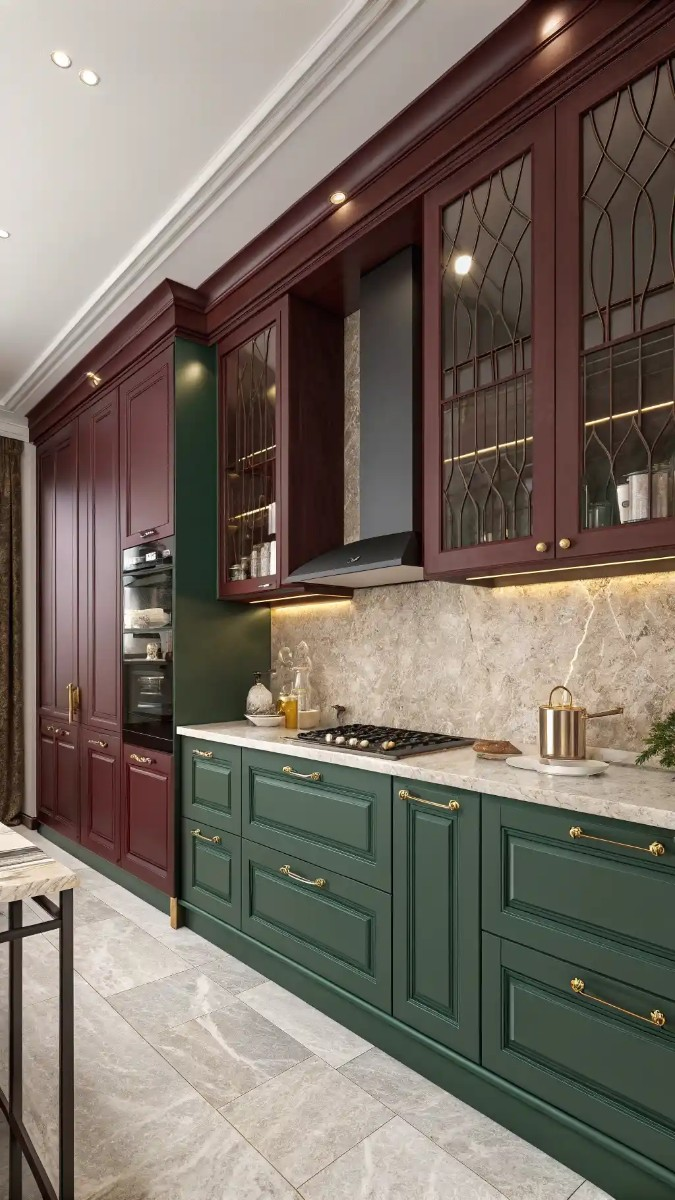
Elegance in a green and burgundy kitchen is achieved by focusing on simplicity, balance, and cohesive design elements that work together seamlessly. Green often acts as the primary tone, providing a calm and grounded backdrop, while burgundy adds a refined touch of warmth and richness. This combination creates a space that feels sophisticated without being overly complex. The elegance lies in the careful coordination of colors, materials, and layout, resulting in a kitchen that is both functional and aesthetically pleasing.
One of the key aspects of creating an elegant kitchen is maintaining consistency throughout the space. Repeating color accents in a controlled manner helps establish visual harmony. For example, burgundy elements can appear in multiple small features such as stools, decor pieces, or kitchen accessories, while green remains dominant in cabinetry or larger surfaces. Neutral colors play an important supporting role by balancing the stronger tones and ensuring smooth transitions between different areas of the kitchen. This approach keeps the design cohesive and easy on the eyes.
Finishing touches elevate the elegance of the overall design. High quality materials such as marble countertops, sleek cabinetry, and polished hardware contribute to a refined appearance. Lighting should be carefully layered to enhance both functionality and ambiance, with a combination of ambient, task, and accent lighting. Reflective surfaces like glass or metallic finishes can also help brighten the space and add a subtle touch of luxury. When these elements are combined thoughtfully, the kitchen becomes a space that reflects elegance, comfort, and timeless design principles, making it both practical and visually stunning.
EMERALD GREEN & BURGUNDY KITCHEN
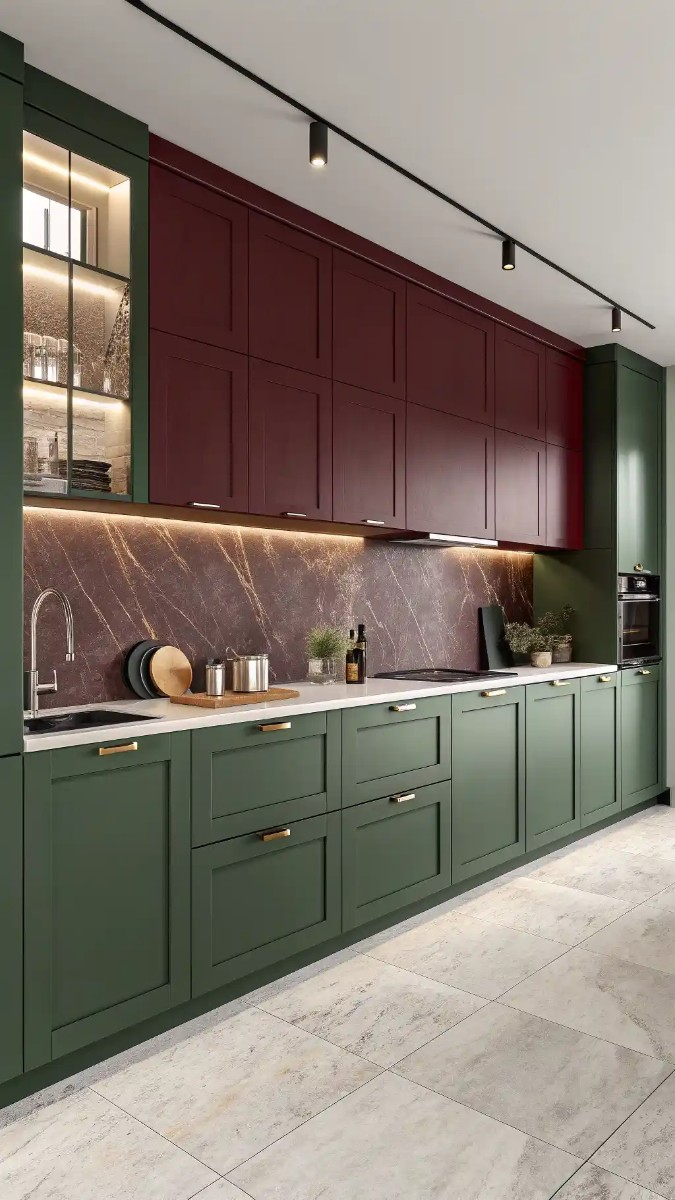
An emerald green and burgundy kitchen creates a bold and luxurious atmosphere that instantly captures attention. Emerald green, known for its deep jewel toned richness, works beautifully as a primary color for cabinetry or kitchen islands. When paired with burgundy accents, the combination feels both dramatic and refined, offering a sense of depth and sophistication. This pairing is especially appealing for Pinterest inspired designs where visual impact and aesthetic appeal are key priorities.
To design an emerald green and burgundy kitchen effectively, balance is essential. Emerald green should dominate larger surfaces, while burgundy is best introduced through accents such as seating, decorative accessories, or backsplash details. Neutral elements like white countertops, light flooring, or soft gray walls help tone down the richness and prevent the space from feeling too heavy. This balanced approach allows both colors to stand out while maintaining a cohesive and comfortable environment.
Material and finish choices further enhance the luxurious feel of this color combination. Metallic accents such as brass or gold hardware pair beautifully with emerald green and burgundy, adding warmth and elegance to the overall design. Marble or quartz countertops with subtle veining can introduce a natural texture that complements both colors. Incorporating layered lighting, including pendant lights and under cabinet fixtures, helps highlight the richness of the palette while creating a welcoming ambiance. The result is a kitchen that feels elegant, balanced, and visually striking from every angle.
GREEN & BURGUNDY KITCHEN: SOPHISTICATED STYLE
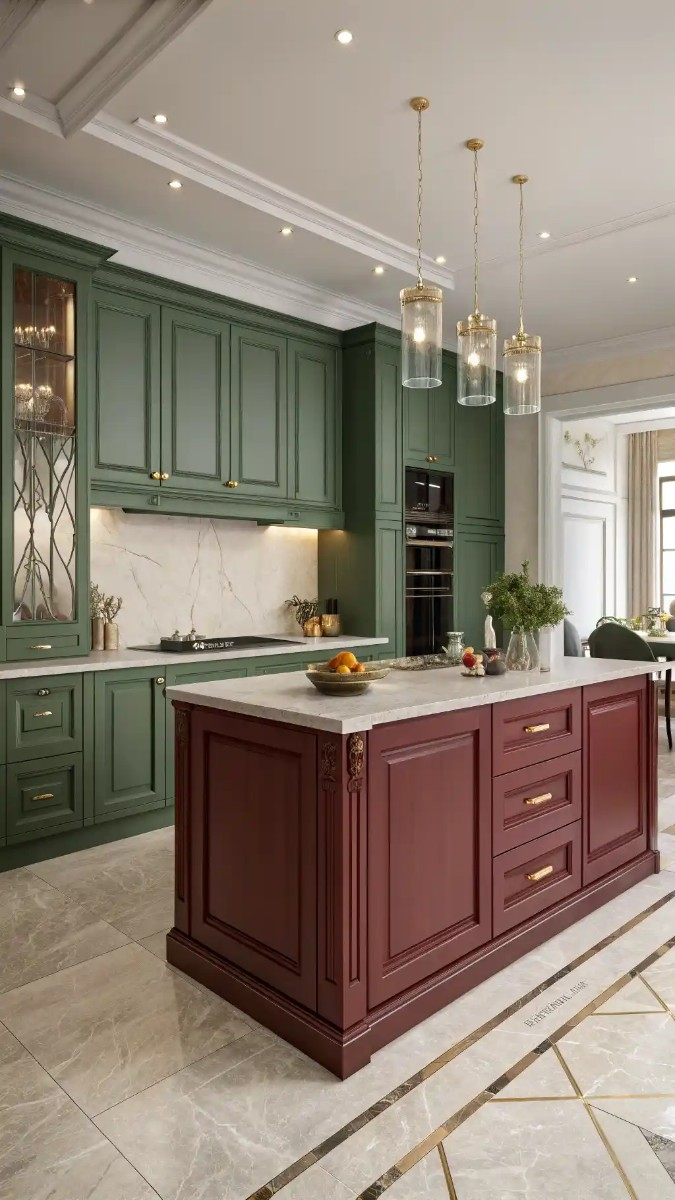
A sophisticated green and burgundy kitchen style focuses on creating a refined and thoughtfully designed space that feels both modern and timeless. This approach often uses deeper, muted shades of green as the foundation, paired with carefully placed burgundy accents that enhance the overall composition. The goal is not to overwhelm the space with color but to integrate it in a way that feels natural and well balanced. This results in a kitchen that is visually appealing while maintaining a calm and organized atmosphere.
In this style, simplicity plays a major role in achieving sophistication. Clean cabinetry designs, minimal hardware, and uncluttered surfaces contribute to a polished look. Green cabinetry can serve as the primary visual anchor, while burgundy appears in smaller elements such as seating, decor, or backsplash patterns. Neutral tones like beige, cream, or light gray can be incorporated to soften transitions between the two colors and maintain visual harmony. This careful distribution ensures that the design feels cohesive and intentional rather than busy.
The use of high quality materials and subtle textures further enhances the sophisticated style. Matte finishes, natural stone countertops, and smooth surfaces create a refined appearance that complements the rich color palette. Lighting should be soft and layered, helping to highlight key areas of the kitchen without overpowering the design. Pendant lights, ambient lighting, and natural light sources all work together to create depth and warmth. When combined thoughtfully, these elements produce a kitchen that feels elegant, balanced, and perfectly suited for both everyday use and stylish gatherings.
GREEN & BURGUNDY KITCHEN: SOPHISTICATED BALANCE
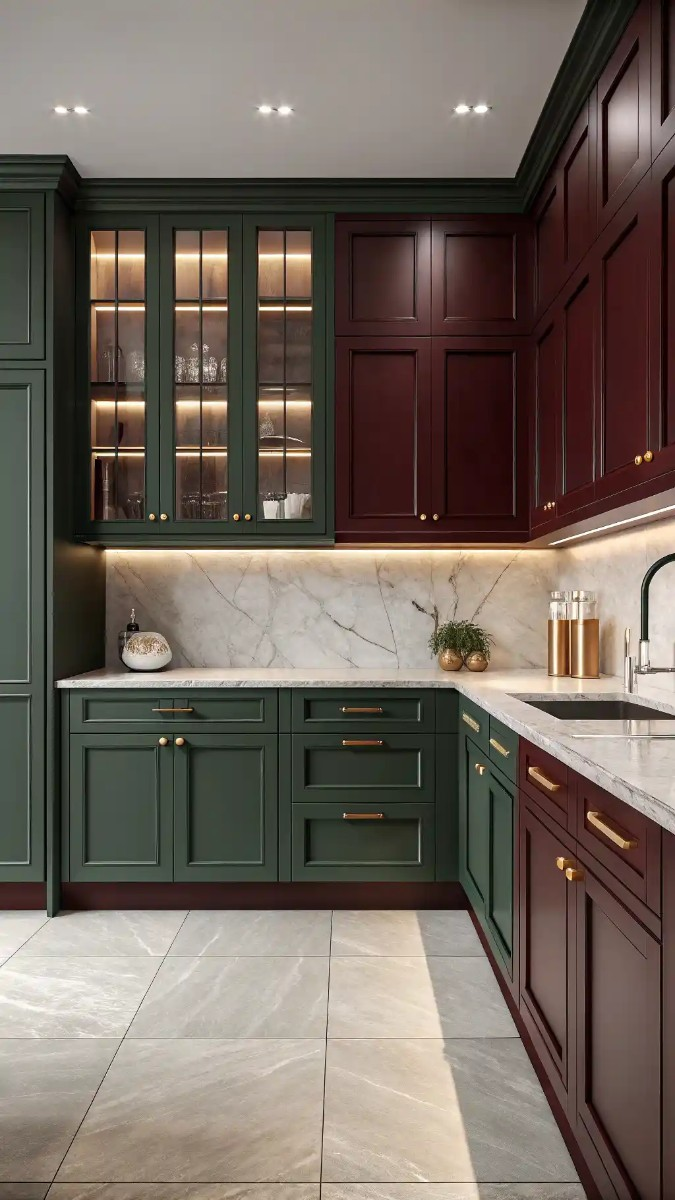
Sophisticated balance in a green and burgundy kitchen is all about creating harmony between two strong and contrasting colors. Instead of allowing one shade to dominate entirely, both green and burgundy are used in a way that complements each other. This balance ensures that the kitchen feels visually stable and comfortable, rather than overwhelming or chaotic. The interplay between cool green tones and warm burgundy hues results in a dynamic yet cohesive environment that is pleasing to the eye.
Achieving this balance requires careful attention to proportion and placement. Typically, green is used as the dominant color for larger elements such as cabinetry, walls, or kitchen islands, while burgundy is introduced in smaller accents. These accents may include bar stools, decorative items, textiles, or subtle design features within the backsplash. Neutral colors play an important supporting role by bridging the gap between the two tones and helping create smooth transitions throughout the space. This layered approach ensures that each color has its own space to shine without competing for attention.
Consistency in materials and finishes also contributes to maintaining balance. Repeating certain textures, hardware finishes, or design elements across the kitchen helps tie everything together visually. Lighting is equally important, as it should evenly illuminate the space and highlight both colors without favoring one over the other. Warm lighting can enhance the richness of burgundy while softening the depth of green, creating a unified look. When all these elements are thoughtfully combined, the kitchen achieves a sophisticated balance that feels elegant, harmonious, and well designed, making it both functional and visually appealing.
Conclusion
Green and burgundy kitchen designs continue to gain popularity because they offer a unique blend of richness, elegance, and modern appeal. This color combination allows homeowners to express creativity while maintaining a sense of balance and harmony within the space. Whether you prefer bold contrasts or subtle elegance, these tones can be adapted to suit a wide range of kitchen styles and layouts.
By carefully selecting materials, textures, and accents, you can create a kitchen that not only looks visually stunning but also feels comfortable and functional for everyday living. From chic modern vibes to timeless elegant contrasts, green and burgundy kitchens provide endless inspiration for transforming your space into something truly special.


